
Grapevine flavescence dorée phytoplasma(PHYP64)
Photos
For publication in journals, books or magazines, permission should be obtained from the original photographers with a copy to EPPO.
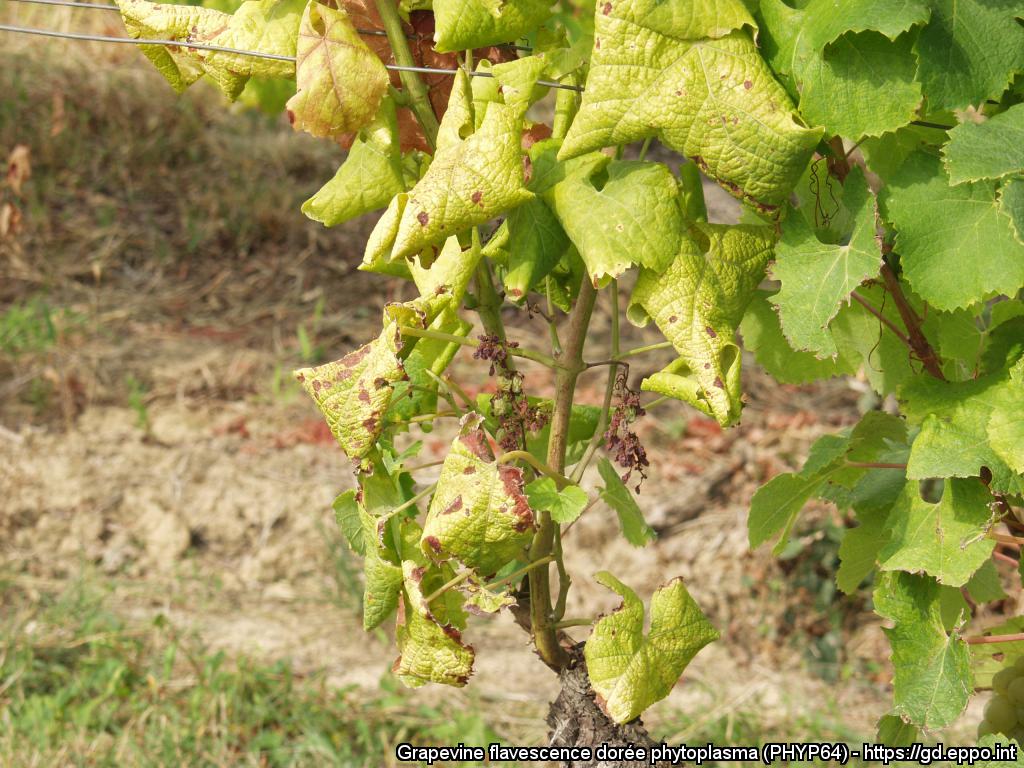
Flavescence dorée symptoms on fruits of Sémillon
Courtesy: INRAE Bordeaux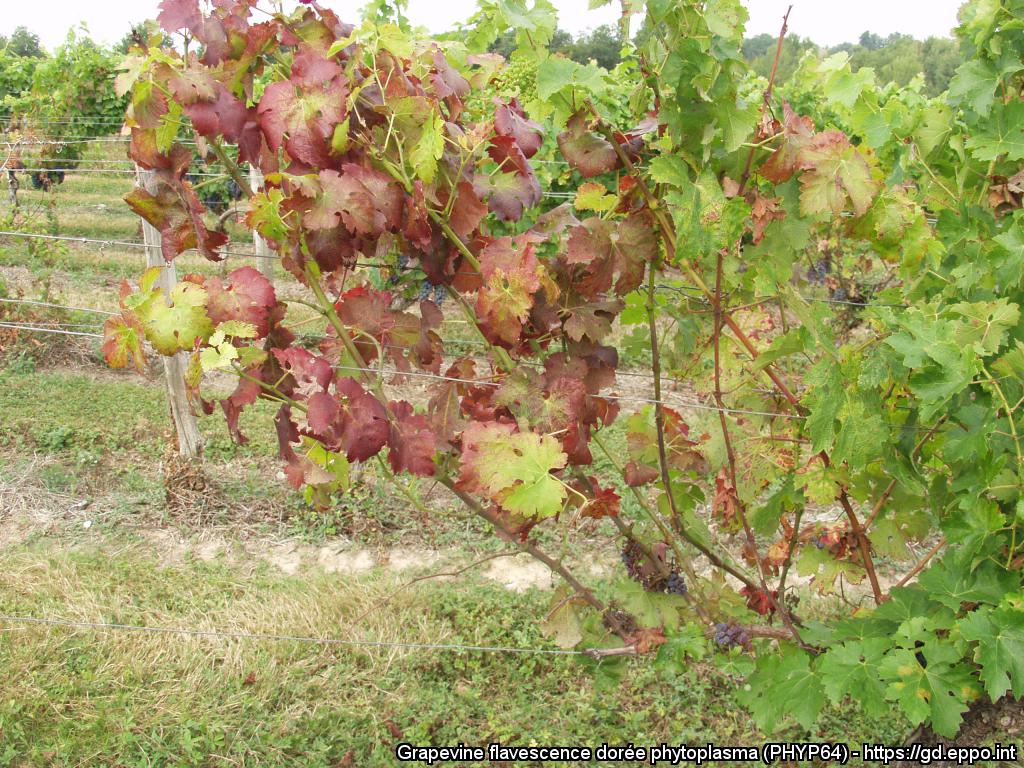
Flavescence dorée symptoms on Cabernet-Sauvignon
Courtesy: INRAE Bordeaux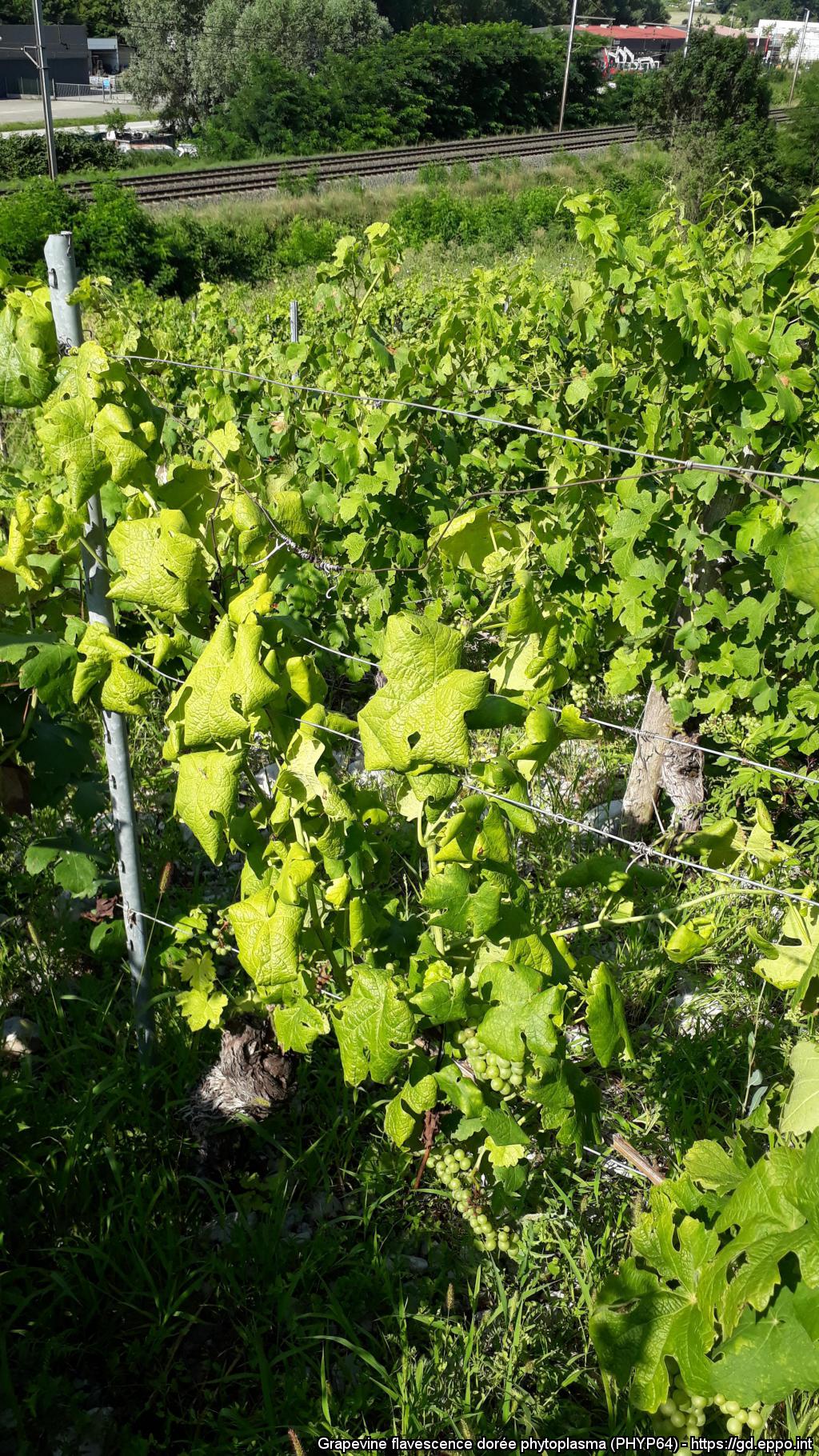
Flavescence dorée symptoms on Roussane
Courtesy: INRAE Bordeaux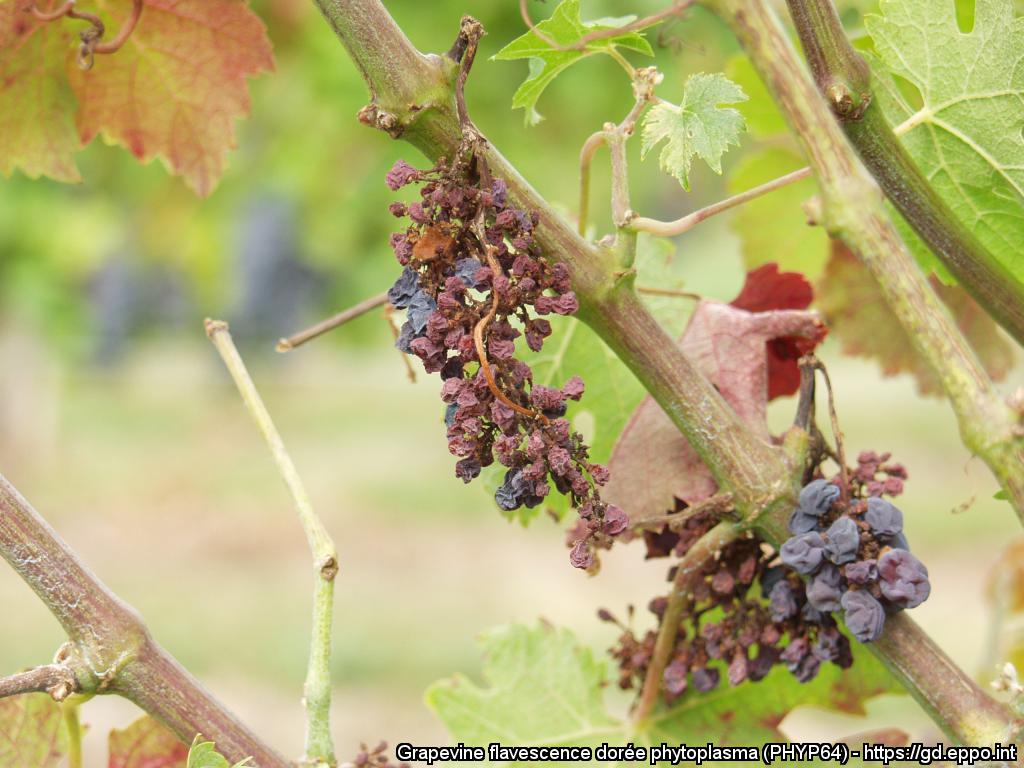
Flavescence dorée symptoms on fruits of Cabernet-Sauvignon
Courtesy: INRAE Bordeaux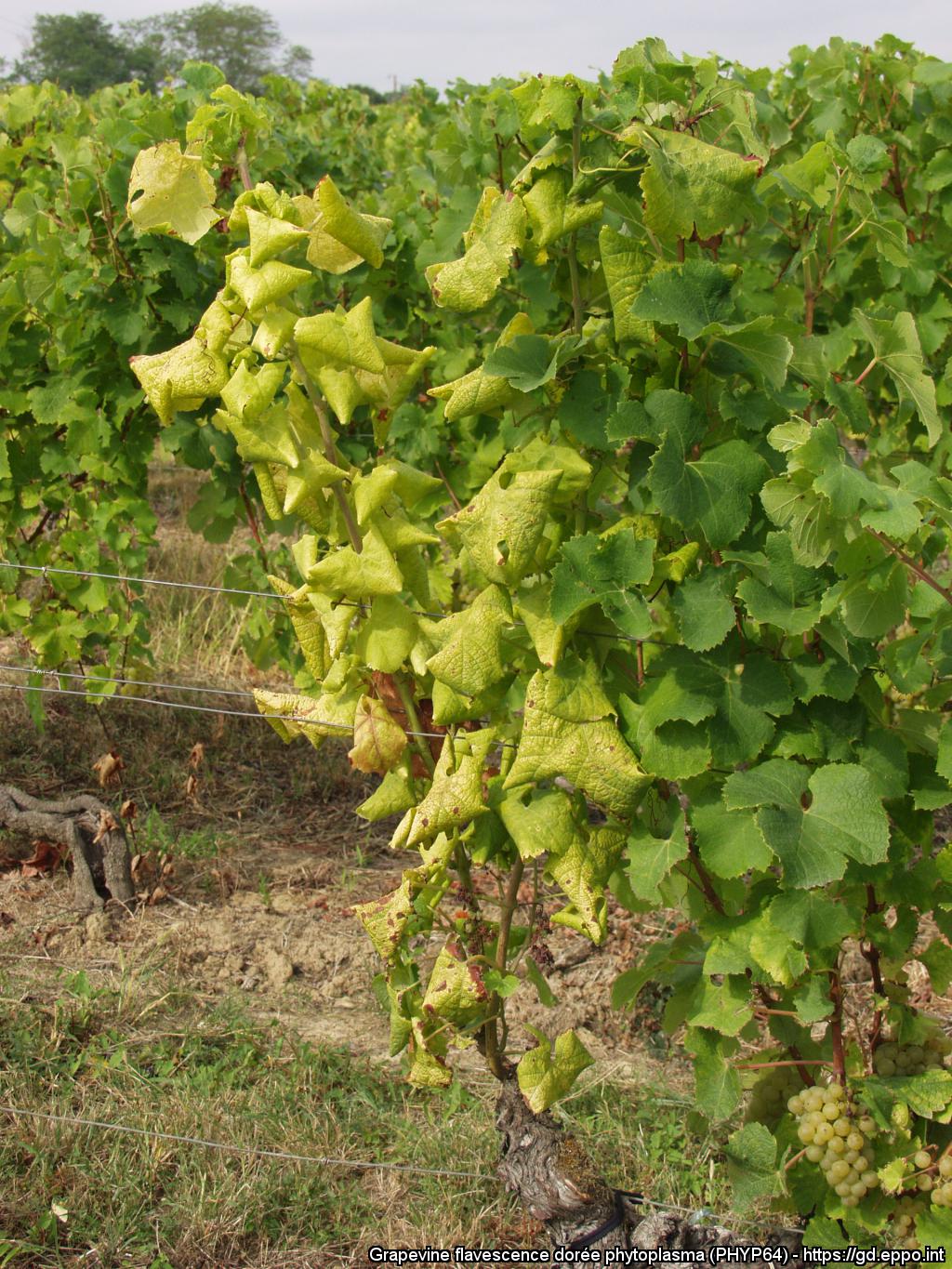
Flavescence dorée symptoms on Sémillon
Courtesy: INRAE Bordeaux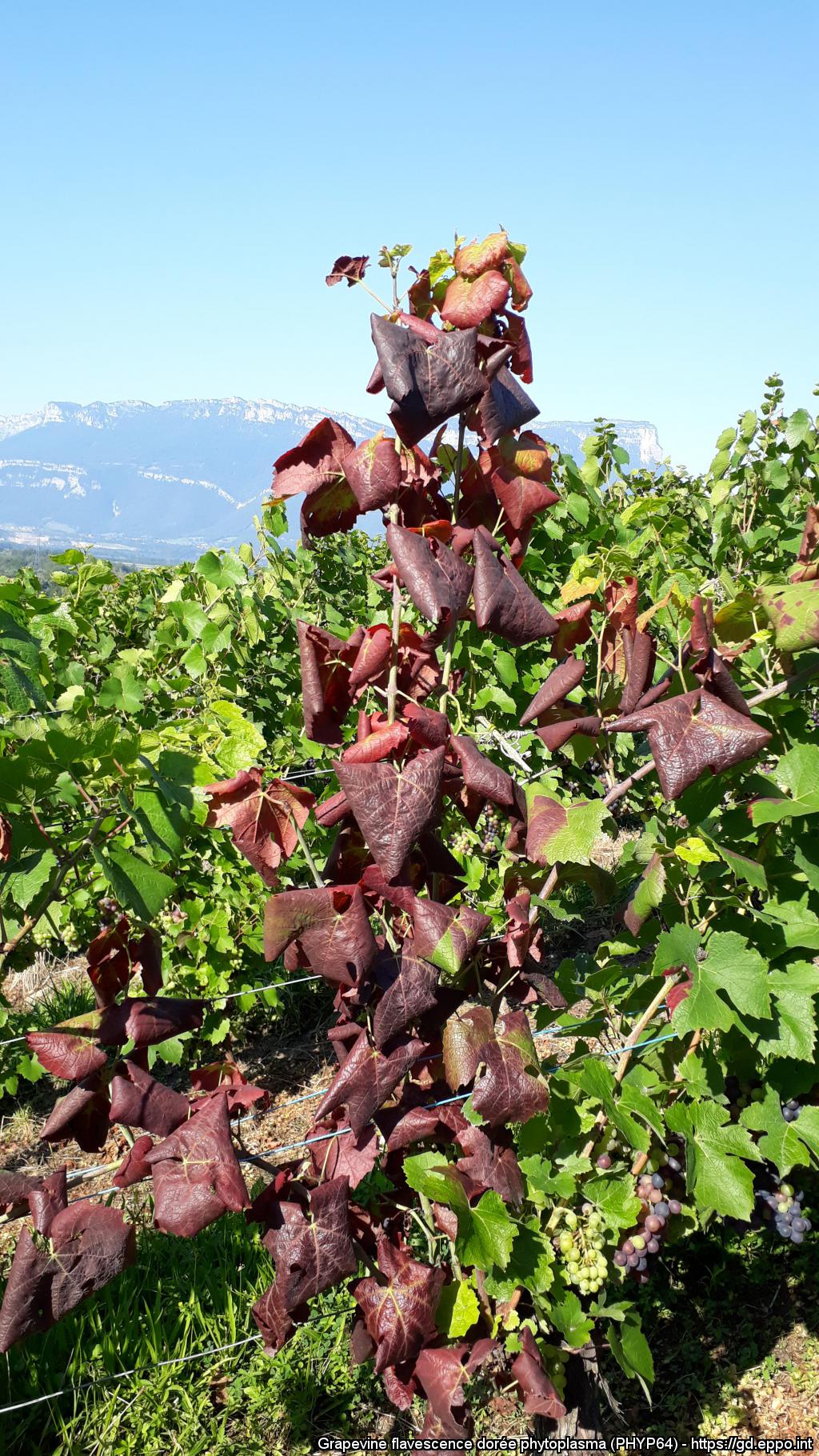
Flavescence dorée symptoms on Gamay
Courtesy: INRAE Bordeaux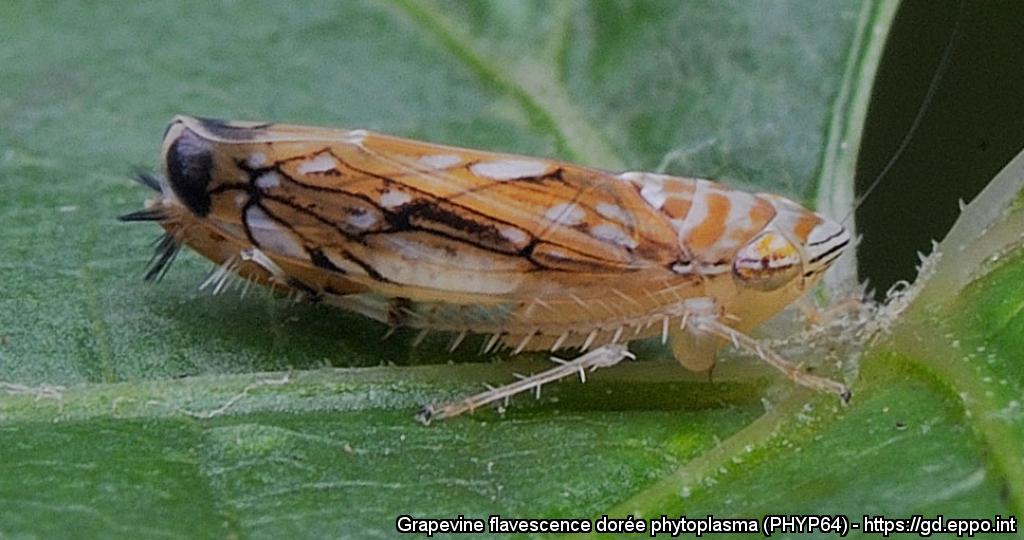
Adult of Scaphoideus titanus, vector of grapevine flavescence doree phytoplasma
Courtesy: INRAE Bordeaux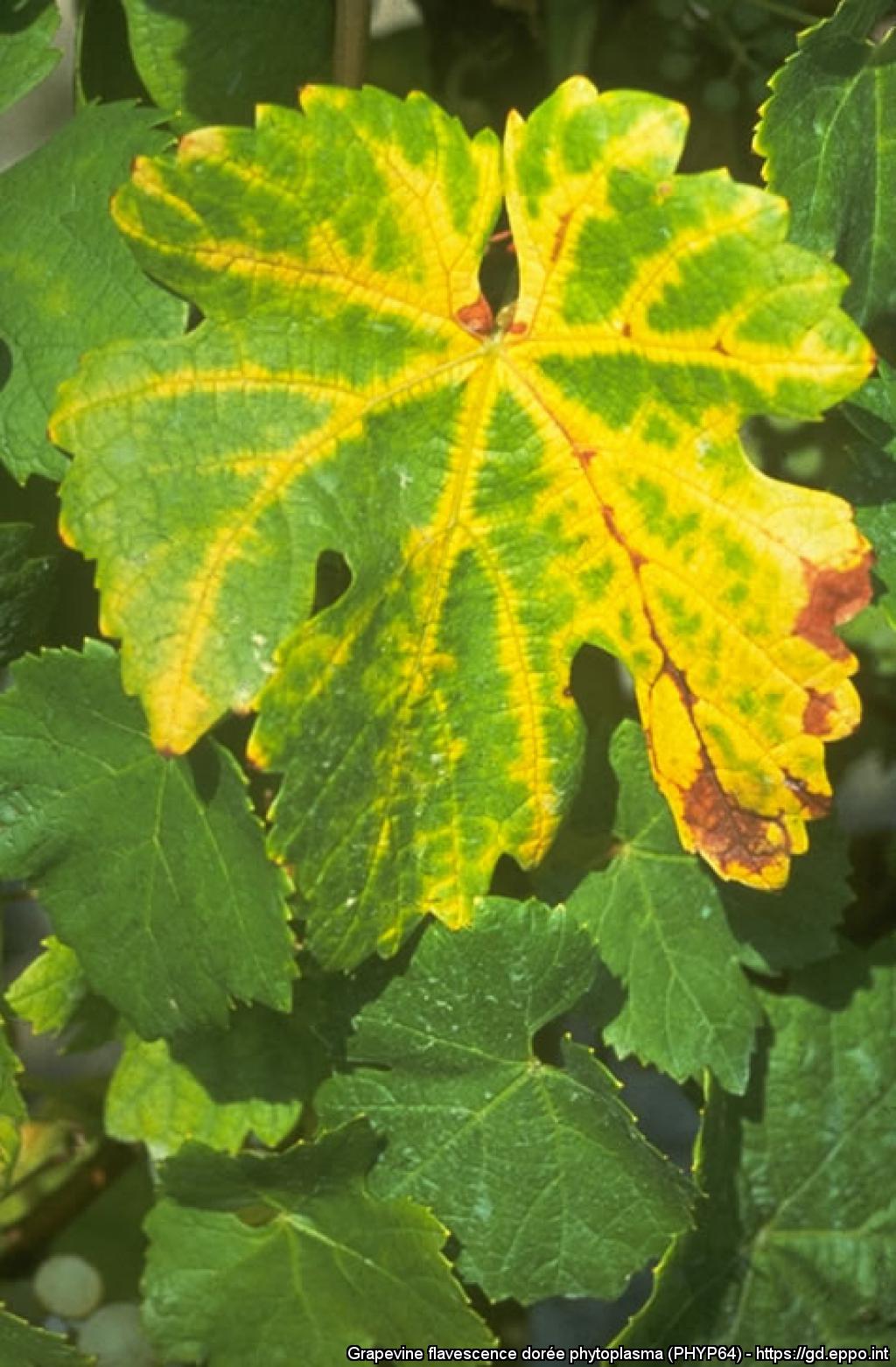
Foliar symptoms on grapevine, showing yellow bands along the veins and some necrosis.
Courtesy: Biologische Bundesanstalt (DE)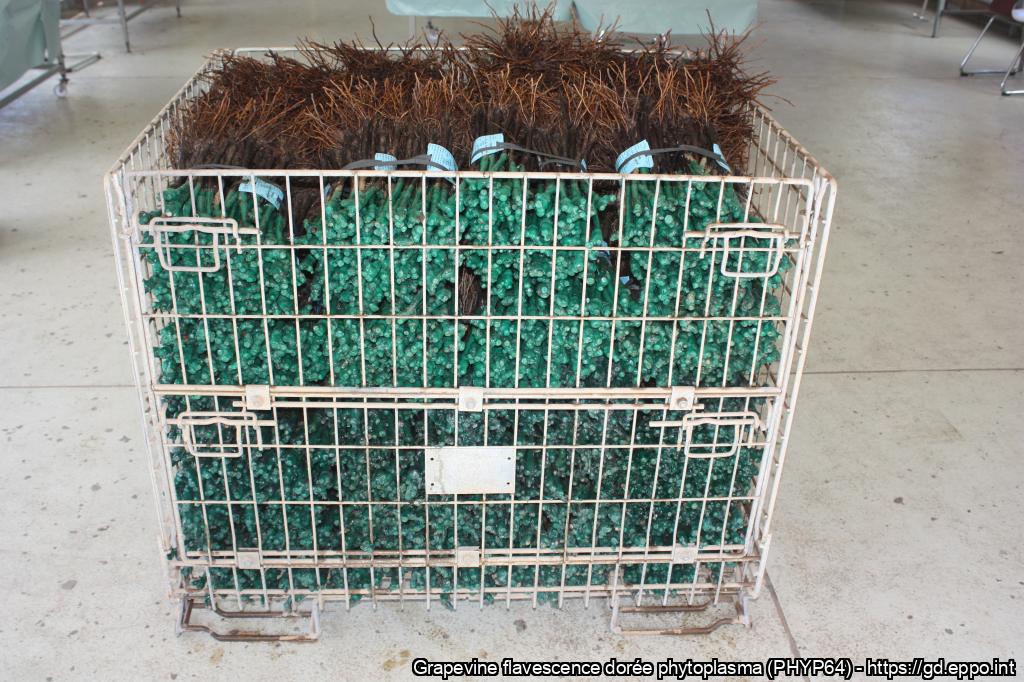
Container with rooted grapevines prepared for hot-water treatment
Courtesy: Matthias Zink (DLR Rheinpfalz, DE)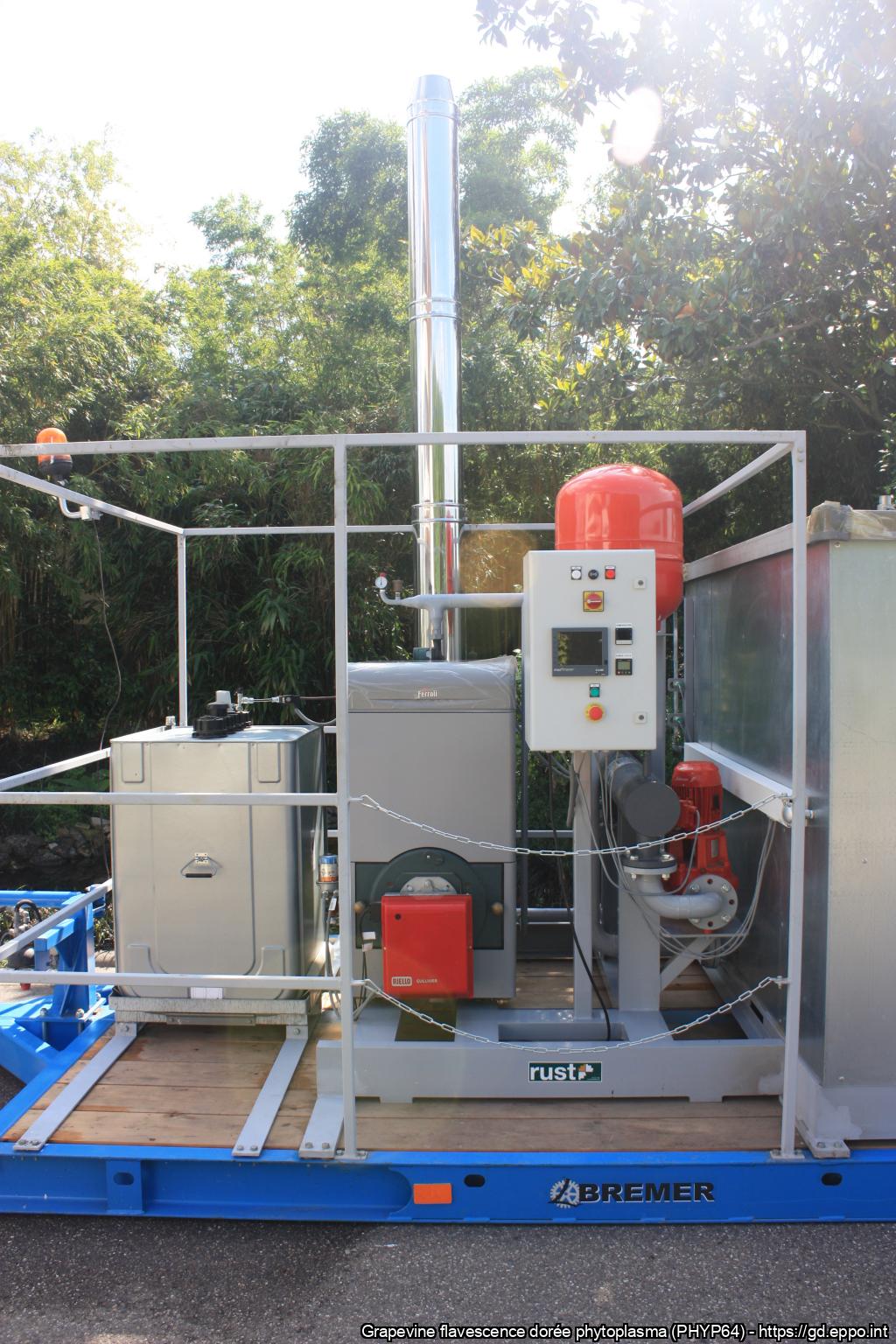
Devices to generate hot water
Courtesy: Matthias Zink (DLR Rheinpfalz, DE)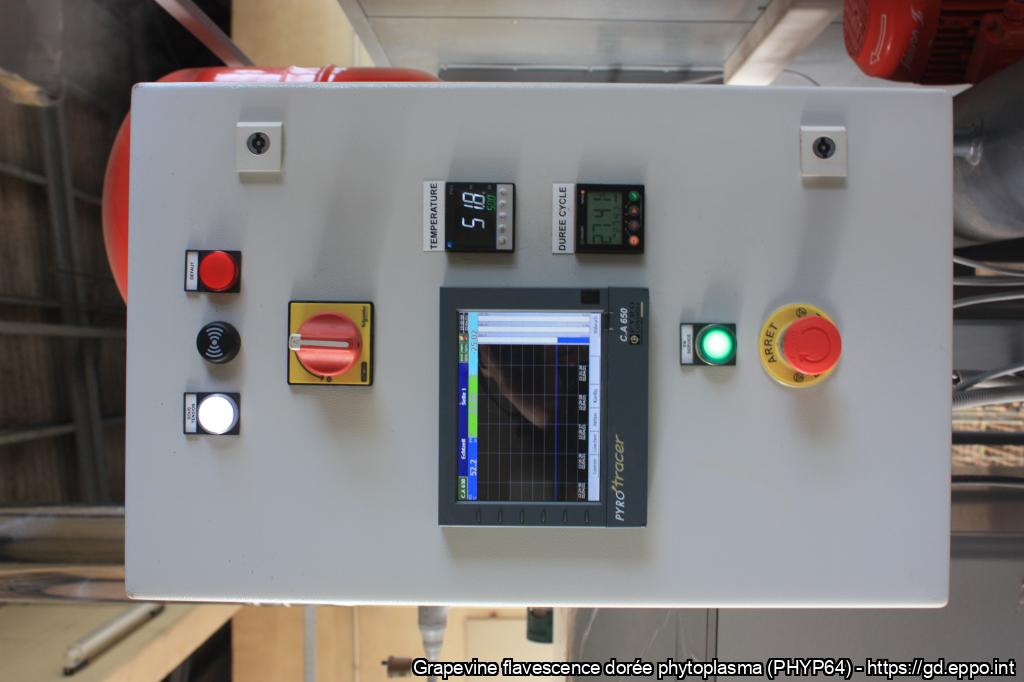
Display hot-water machine
Courtesy: Matthias Zink (DLR Rheinpfalz, DE)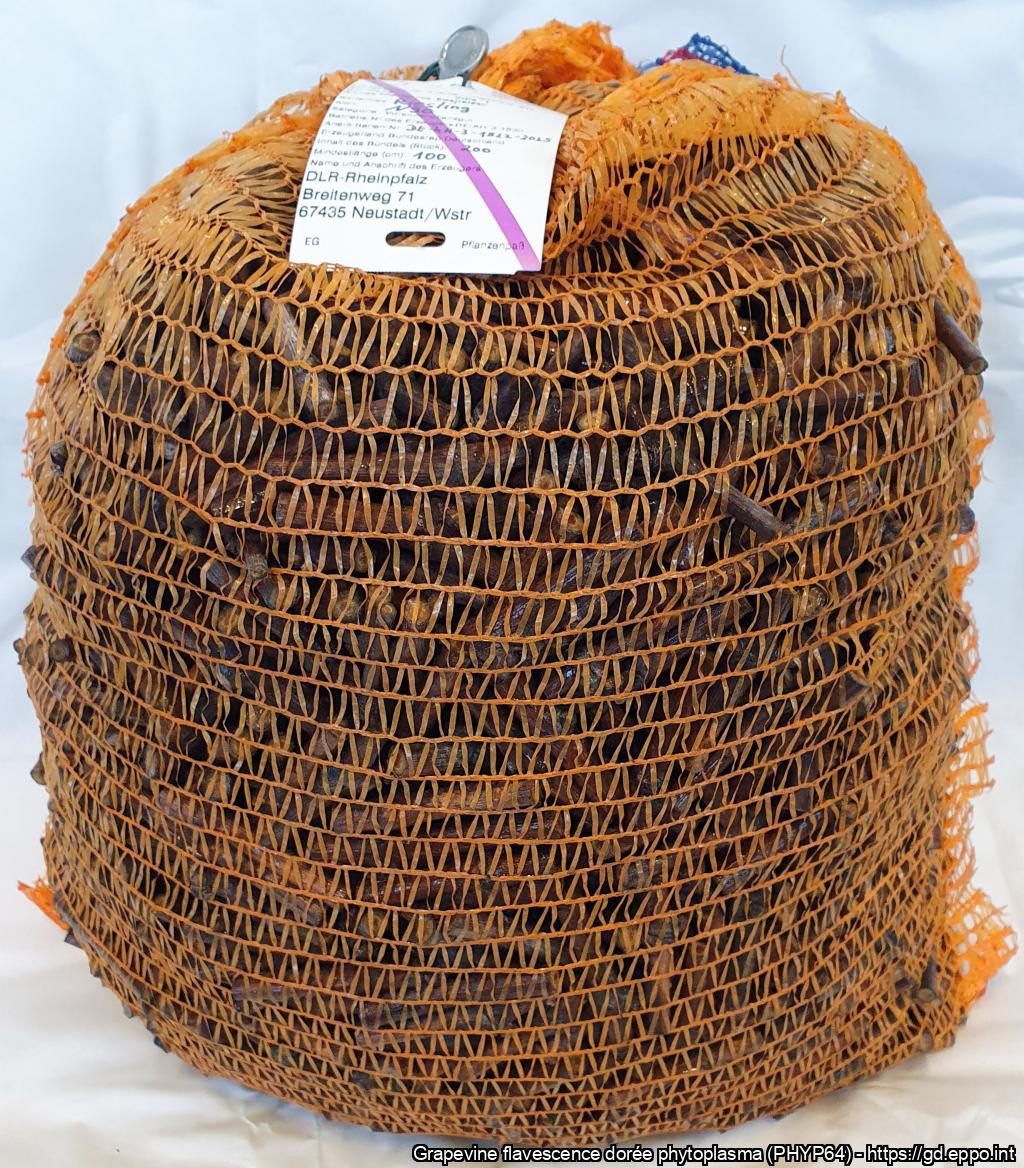
Grapevine scion wood cuttings prepared for hot-water treatment
Courtesy: Matthias Zink (DLR Rheinpfalz, DE)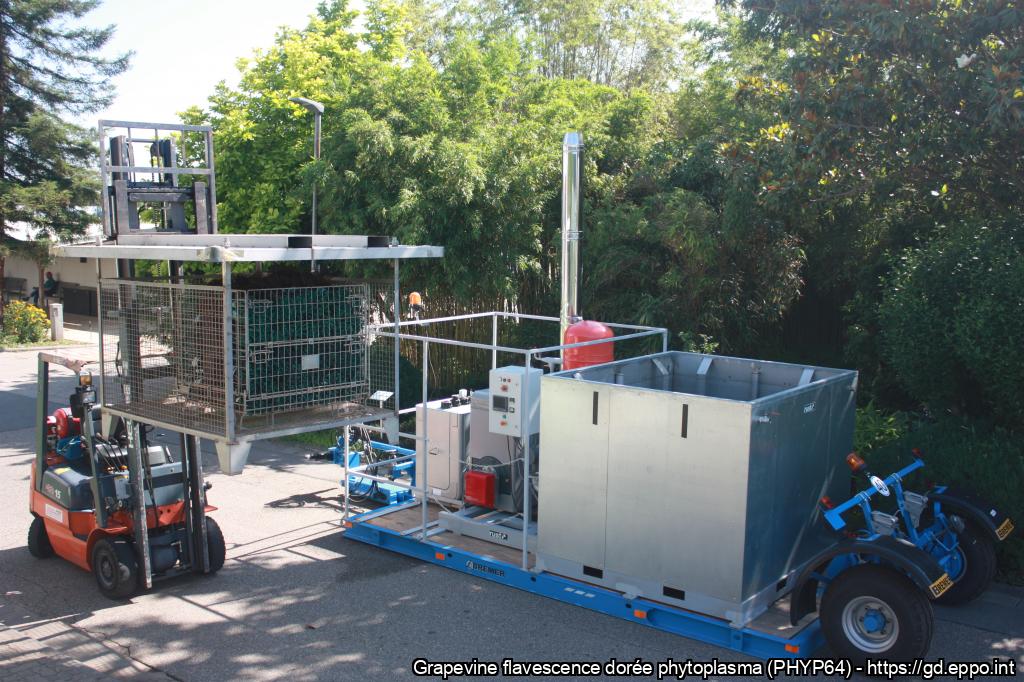
Hot water machine type TEC_Chauvin
Courtesy: Matthias Zink (DLR Rheinpfalz, DE)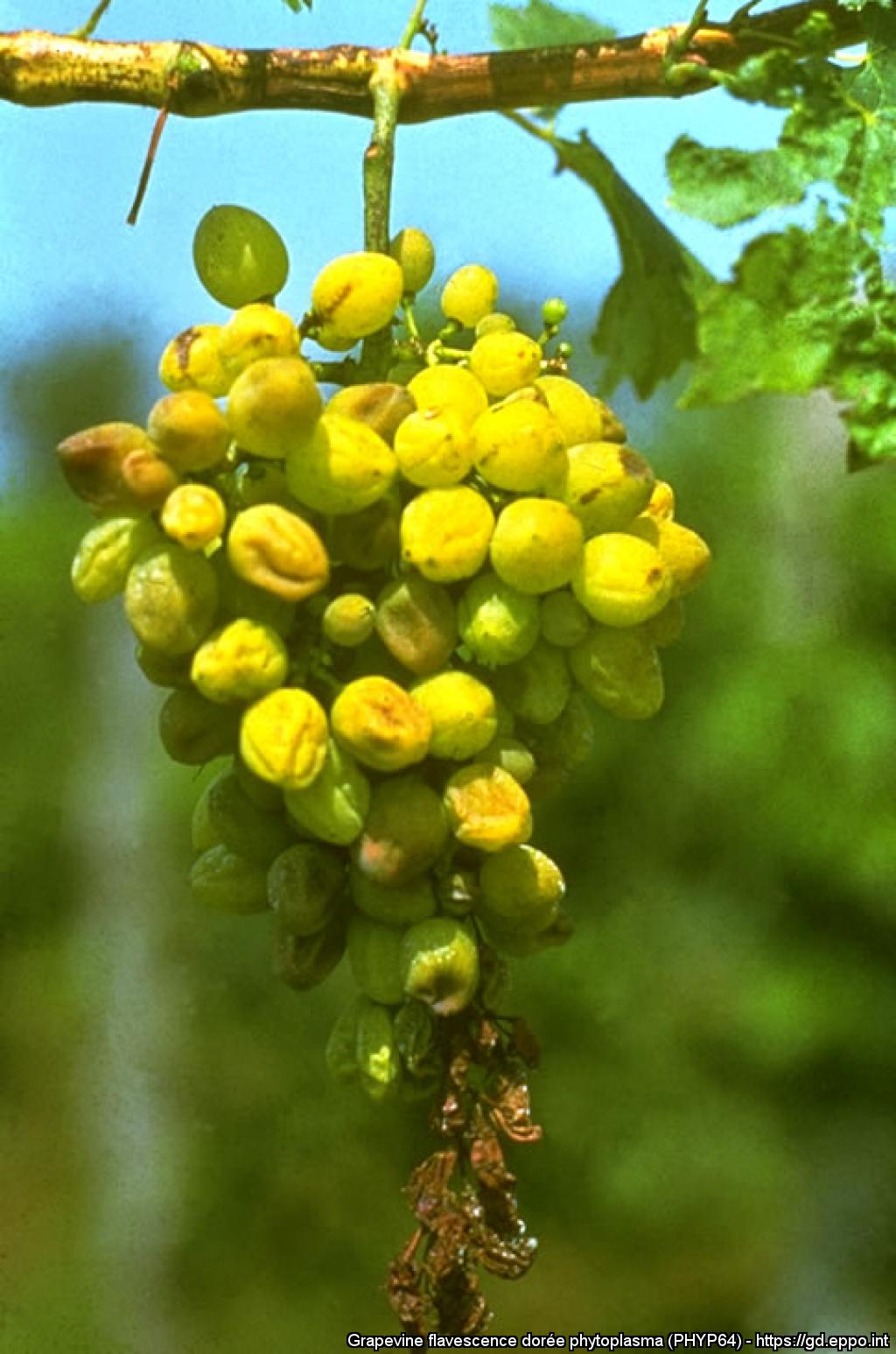
Symptoms of late infection on a grape, showing brown, shrivelled fruits.
Courtesy: Biologische Bundesanstalt (DE)
Leaves of grapevine cv. Chardonnay affected by flavescence dorée showing typical yellowing of the laminar blade and rolling of margins. Leaves present a triangular shape.
Courtesy: CREA – Research Centre for Plant Protection and Certification (IT)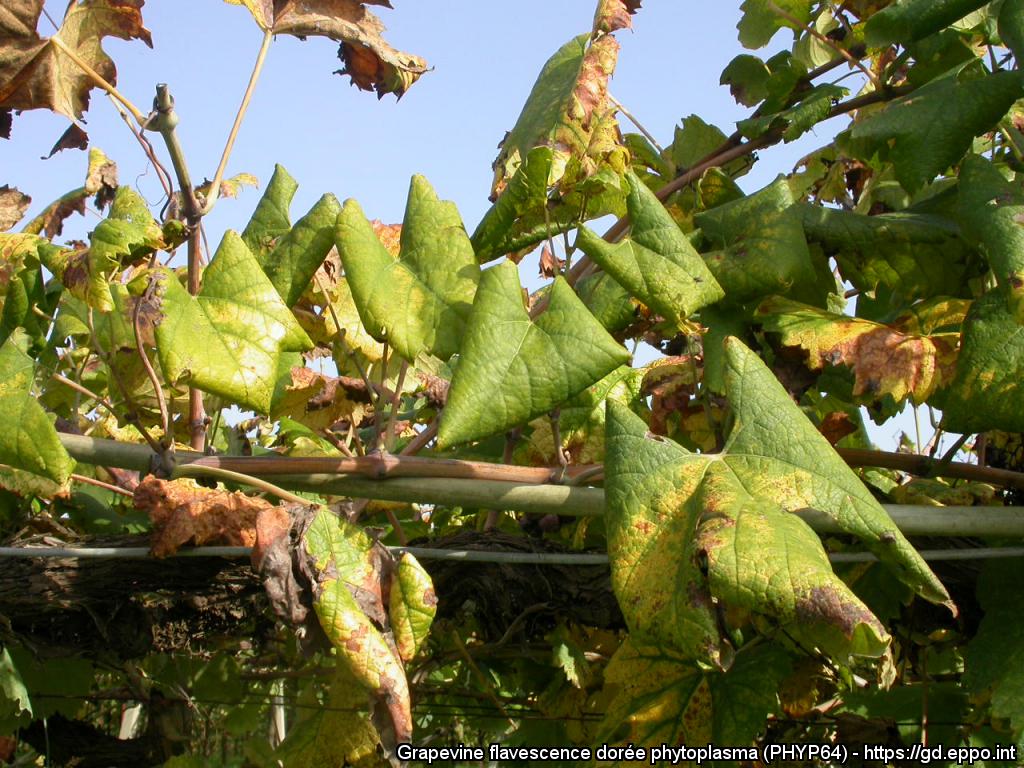
Leaves of grapevine cv. Bellone affected by stolbur phytoplasmas. Symptoms are indistinguishable from those of flavescence dorée. Molecular diagnosis is the only way to discriminate phytoplasmas belonging to different groups.
Courtesy: Dr. Luca Ferretti, CREA – Research Centre for Plant Protection and Certification (IT)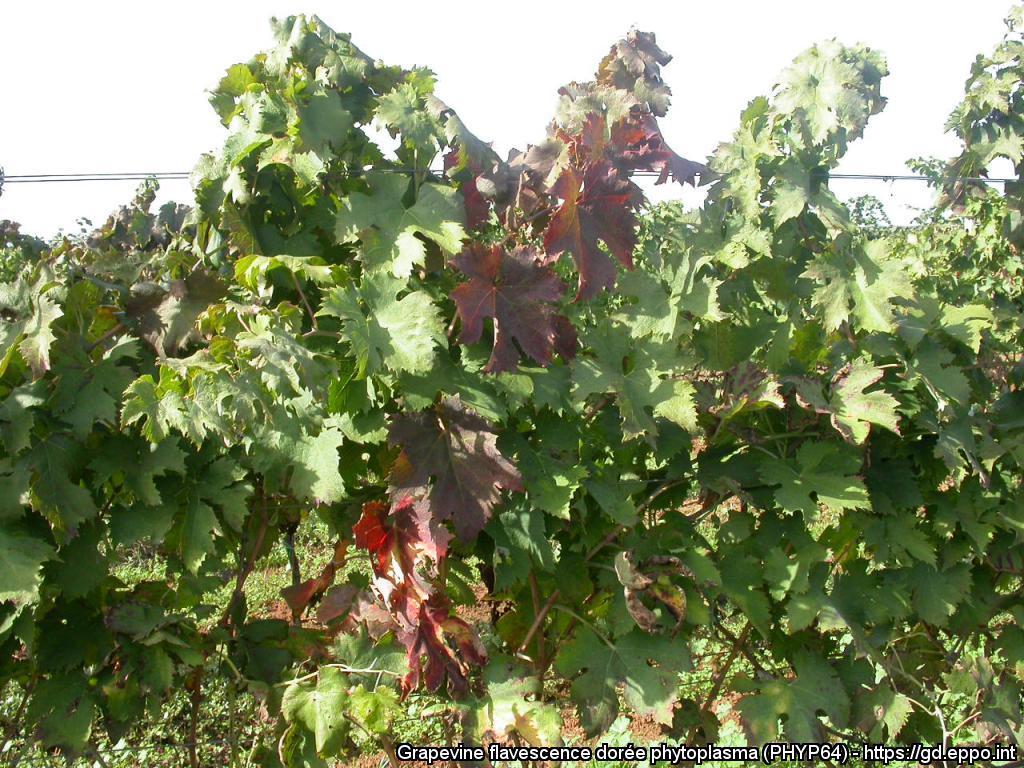
Leaves of red grapevine cultivars affected by flavescence dorée showing rolling and reddening of the laminae. Symptoms are often present on a single shoot of the plant.
Courtesy: Dr. Luca Ferretti, CREA – Research Centre for Plant Protection and Certification (IT)