
Frankliniella occidentalis(FRANOC)
Photos
For publication in journals, books or magazines, permission should be obtained from the original photographers with a copy to EPPO.
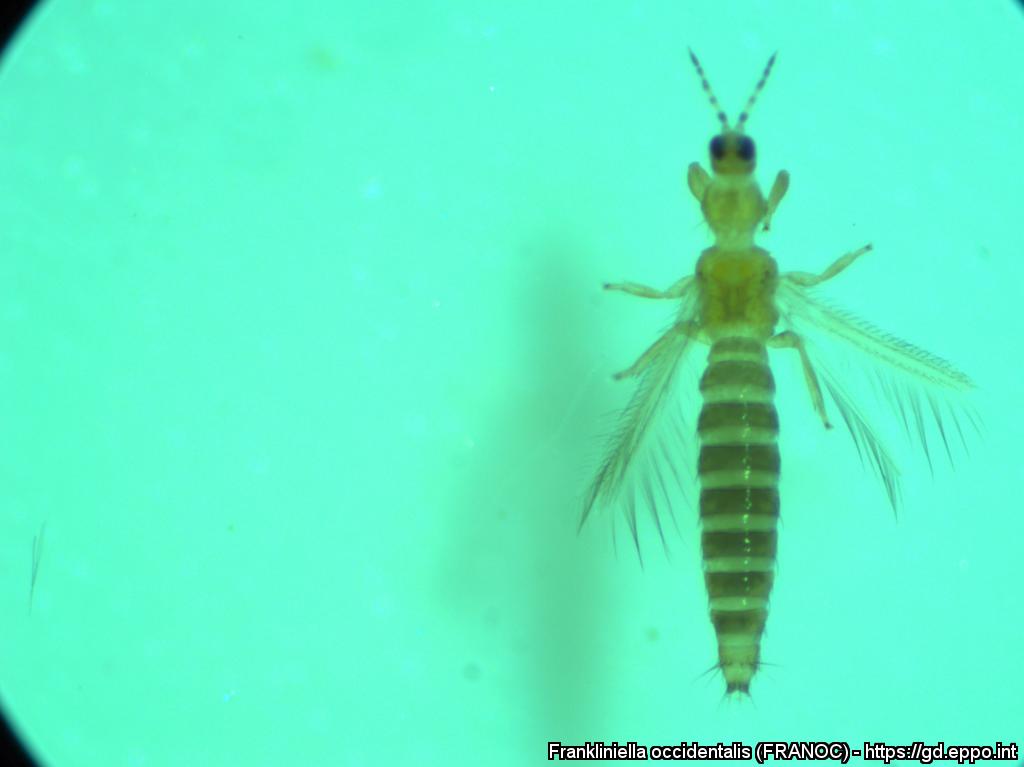
Collected from Dianthus sp. imported from South Africa
Courtesy: Blandine Delbourse - Point of Entry Roissy CDG airport (FR)
Collected from Dianthus sp. imported from South Africa
Courtesy: Blandine Delbourse - Point of Entry Roissy CDG airport (FR)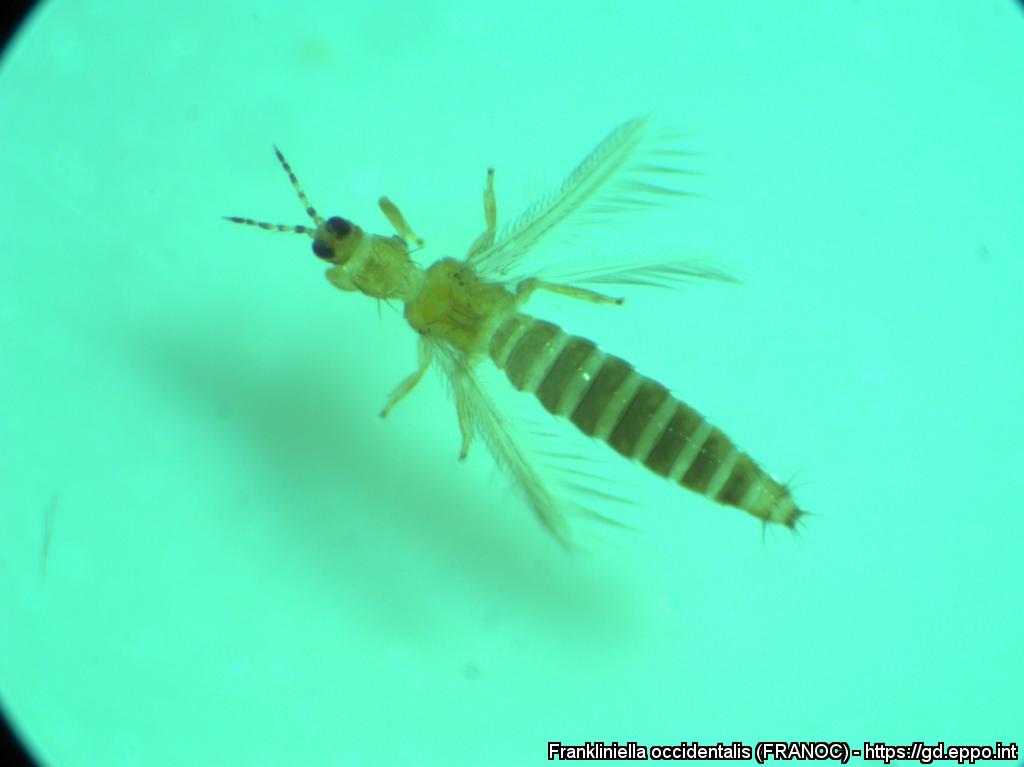
Collected from Dianthus sp. imported from South Africa
Courtesy: Blandine Delbourse - Point of Entry Roissy CDG airport (FR)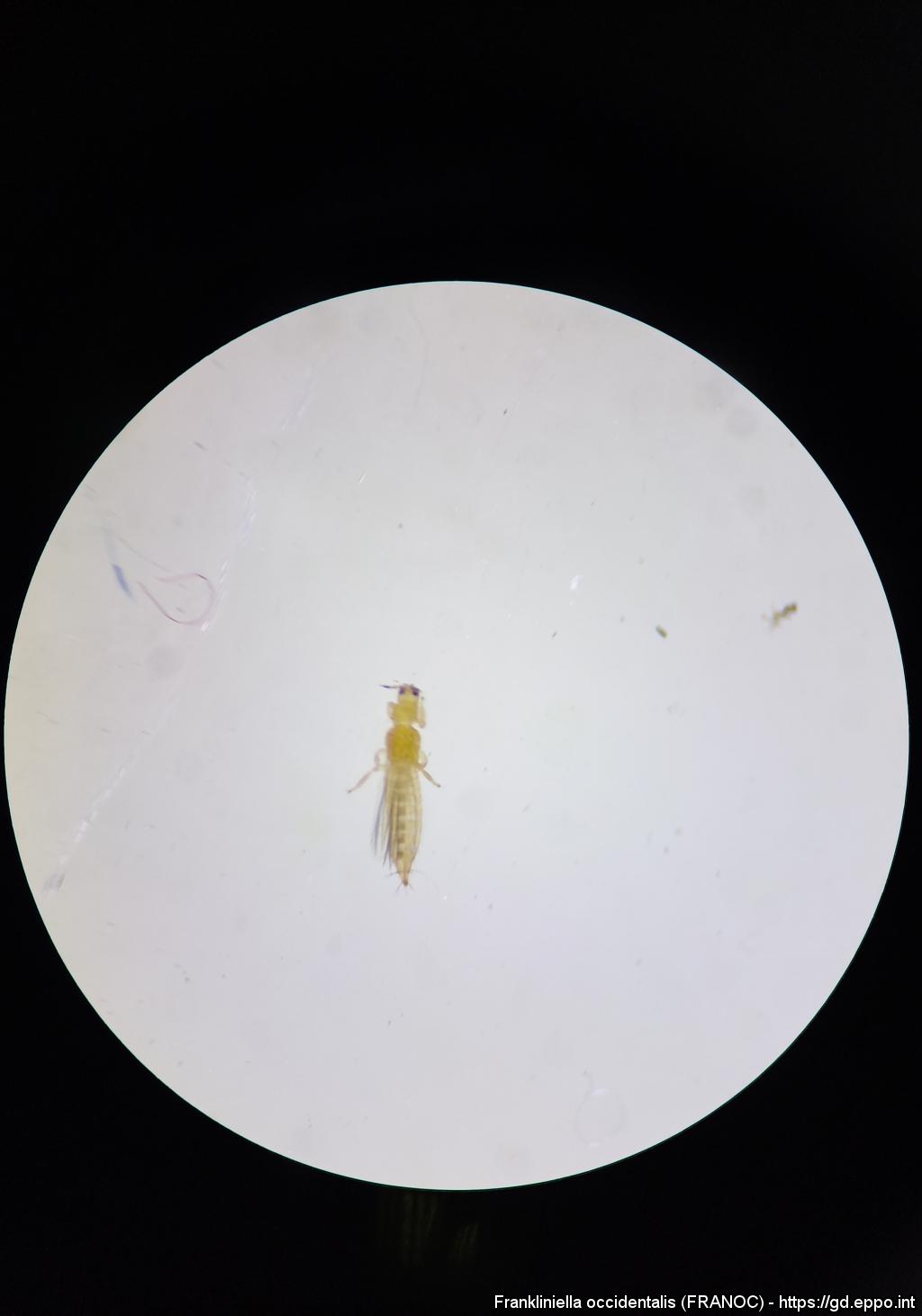
Frankkliniella occidentalis collected on Morus nigra imported from Mexico
Courtesy: Blandine Delbourse - Point of Entry Roissy CDG airport (FR)
Larvae of Frankliniella occidentalis on Fragaria sp. imported from the USA
Courtesy: Blandine Delbourse - Point of Entry Roissy CDG airport (FR)
Larvae of Frankliniella occidentalis collected on Fragaria sp. imported from the USA
Courtesy: Blandine Delbourse - Point of Entry Roissy CDG airport (FR)
Collected from Fragaria sp. imported from the United States
Courtesy: Blandine Delbourse - Point of Entry Roissy CDG airport (FR)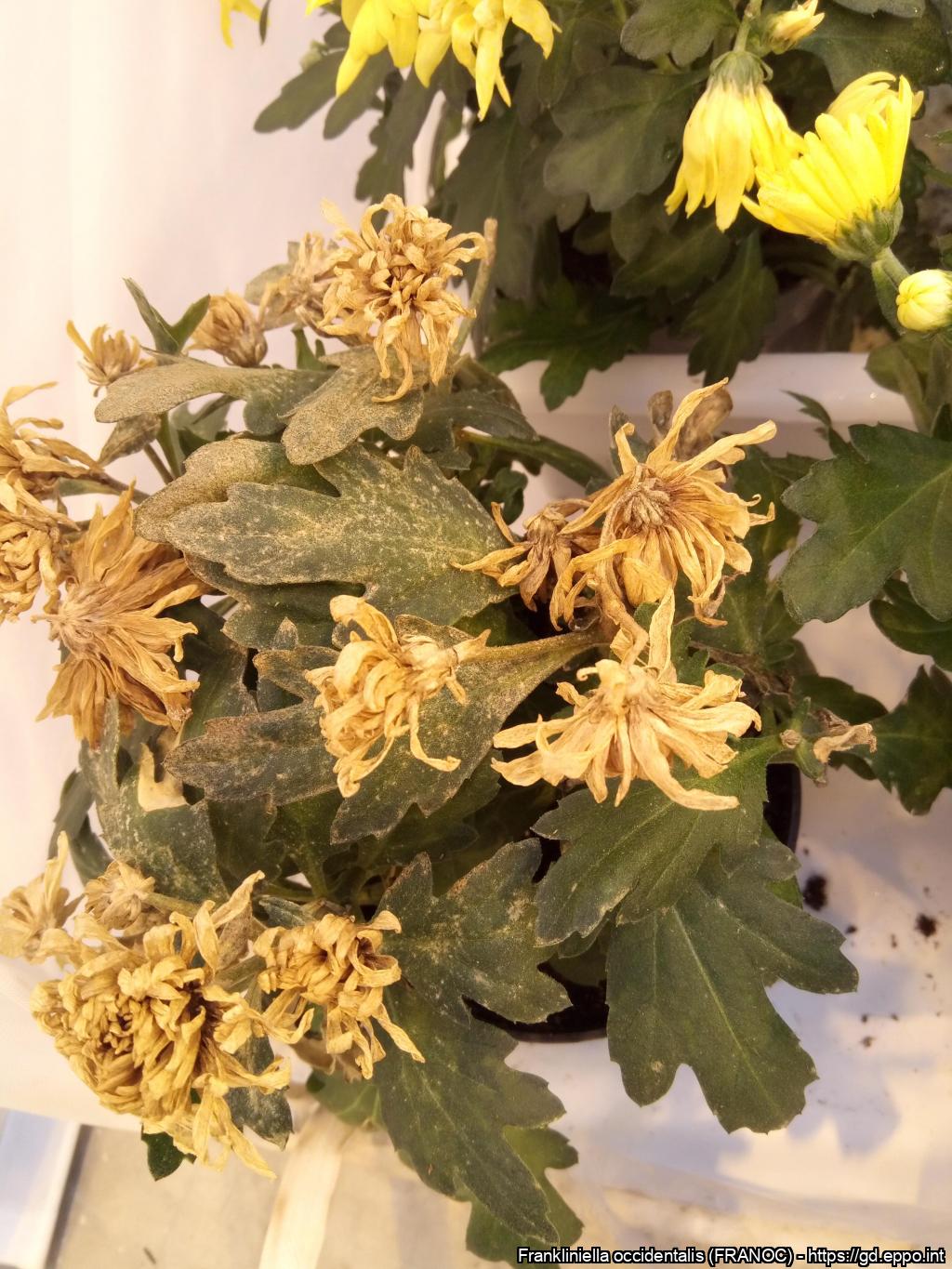
Damaged chrysanthemum plants, infested with Frankliniella occidentalis, rearing of the thrips at BU Greenhouse Horticulture, Wageningen University & Research, Bleiswijk, the Netherlands (winter 2020).
Courtesy: Evgenia Sarakatsani, PhD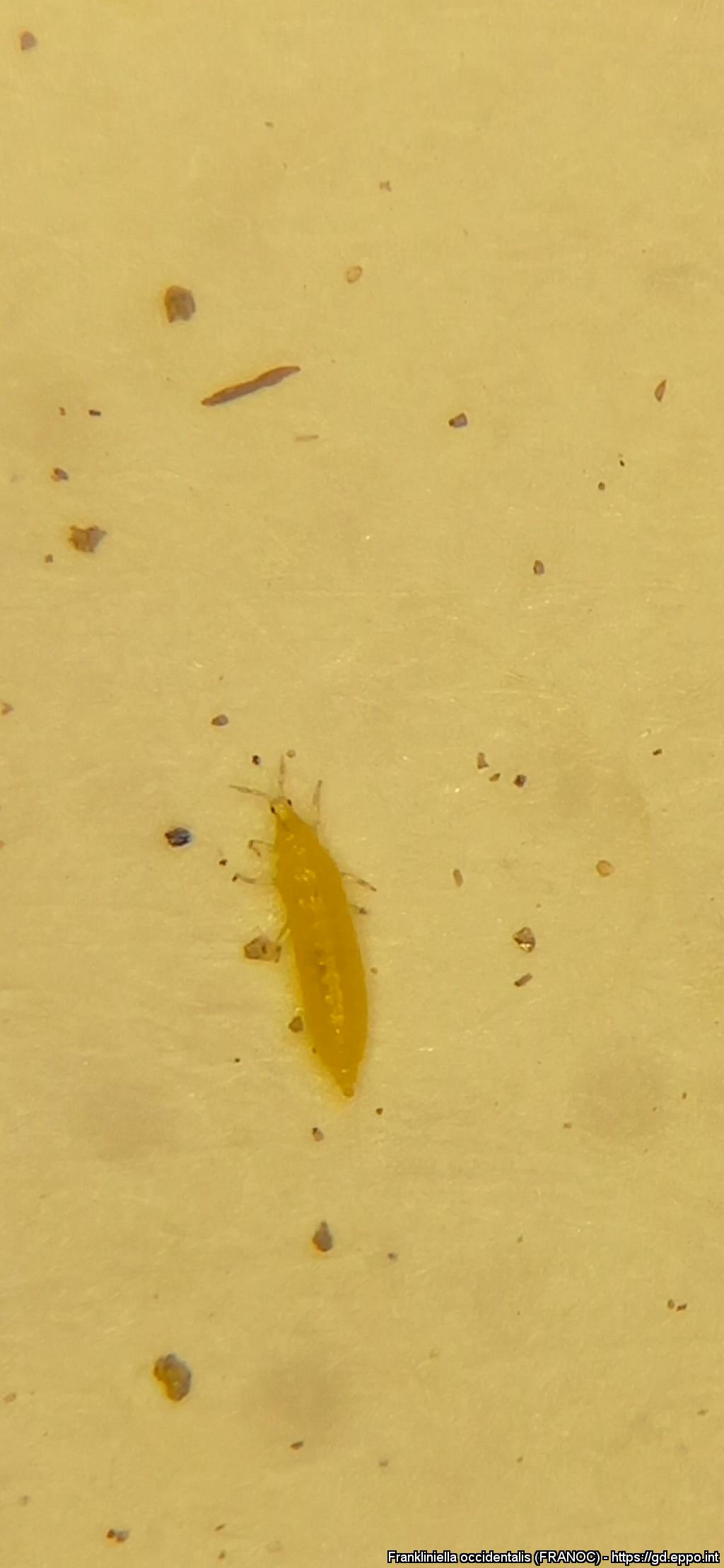
Collected from Ocimum basilicum (leaves) imported Kenya
Courtesy: Blandine Delbourse - Point of Entry Roissy CDG airport (FR)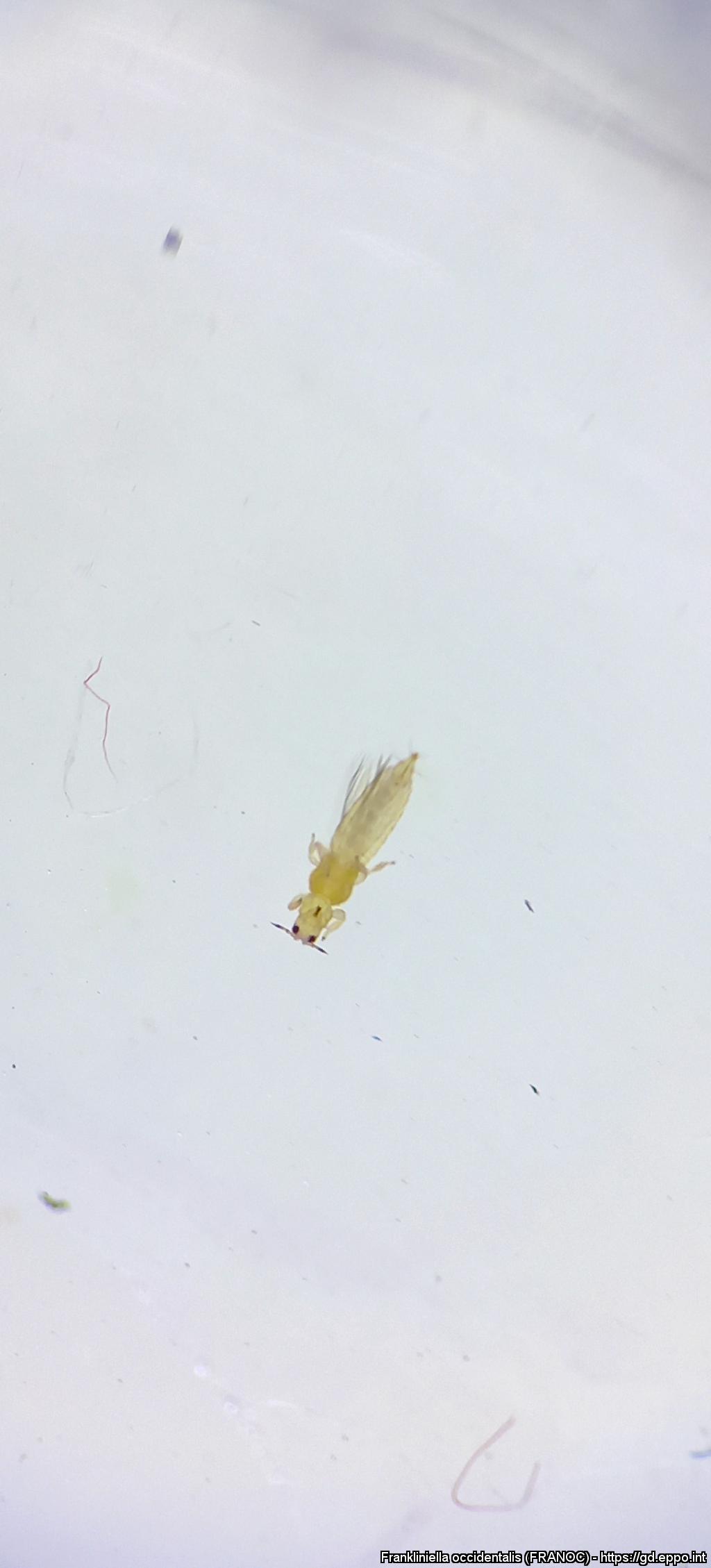
Frankkliniella occidentalis collected on Morus nigra imported from Mexico
Courtesy: Blandine Delbourse - Point of Entry Roissy CDG airport (FR)
Adults of Frankliniella occidentalis: one male (smaller) and two females.
Courtesy: P.M.J Ramakers - PTG, Naaldwijk (NL)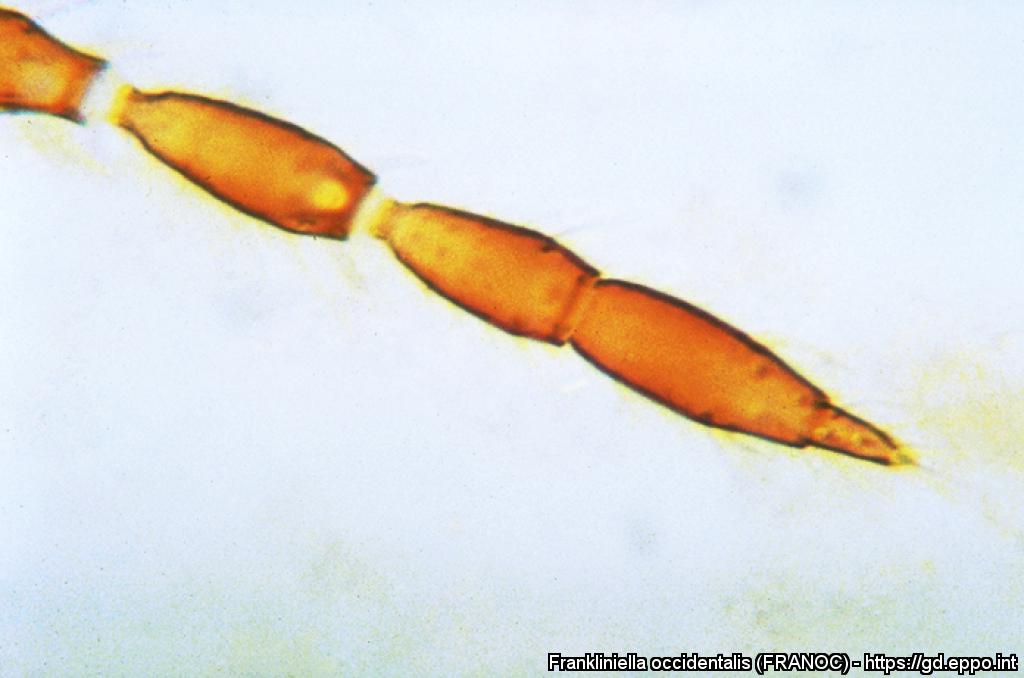
Terminal part of antennae of Thrips tabaci (left).
Courtesy: P.M.J Ramakers - PTG, Naaldwijk (NL)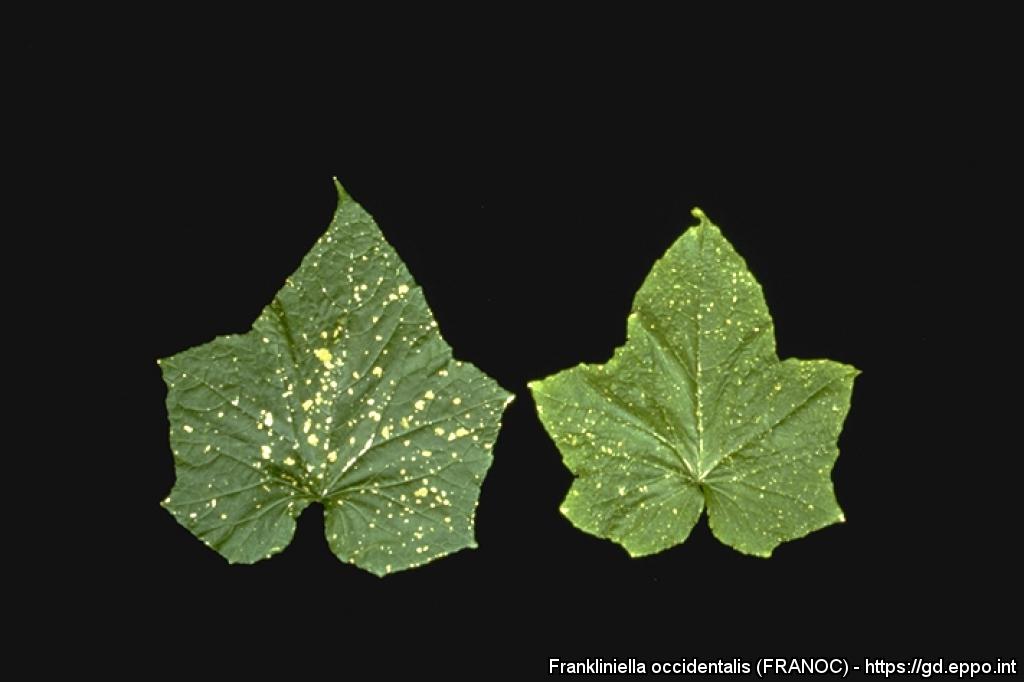
Thrips damage on cucumber leaves: F. occidentalis with coarser pattern (left); Thrips tabaci on right, for comparison.
Courtesy: P.M.J Ramakers - PTG, Naaldwijk (NL)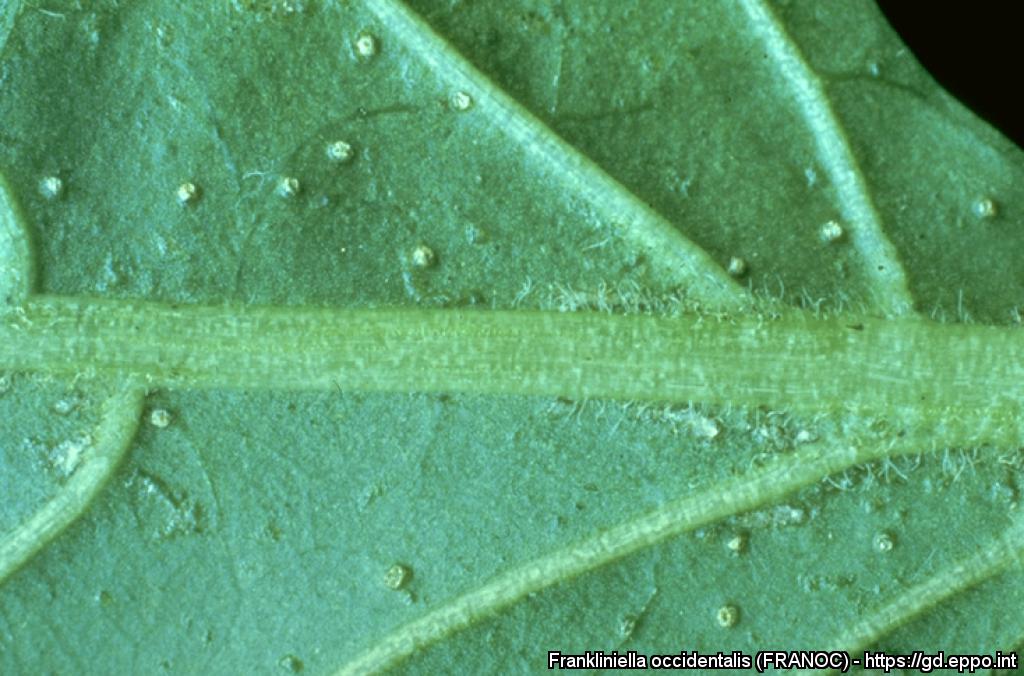
Symptoms caused by oviposition of F. occidentalis on capsicum leaves.
Courtesy: P.M.J Ramakers - PTG, Naaldwijk (NL)
Terminal part of antennae of Frankliniella occidentalis showing the additional antennal segment of the latter.
Courtesy: P.M.J Ramakers - PTG, Naaldwijk (NL)