
Litylenchus crenatae mccannii(LITYMC)
Photos
For publication in journals, books or magazines, permission should be obtained from the original photographers with a copy to EPPO.
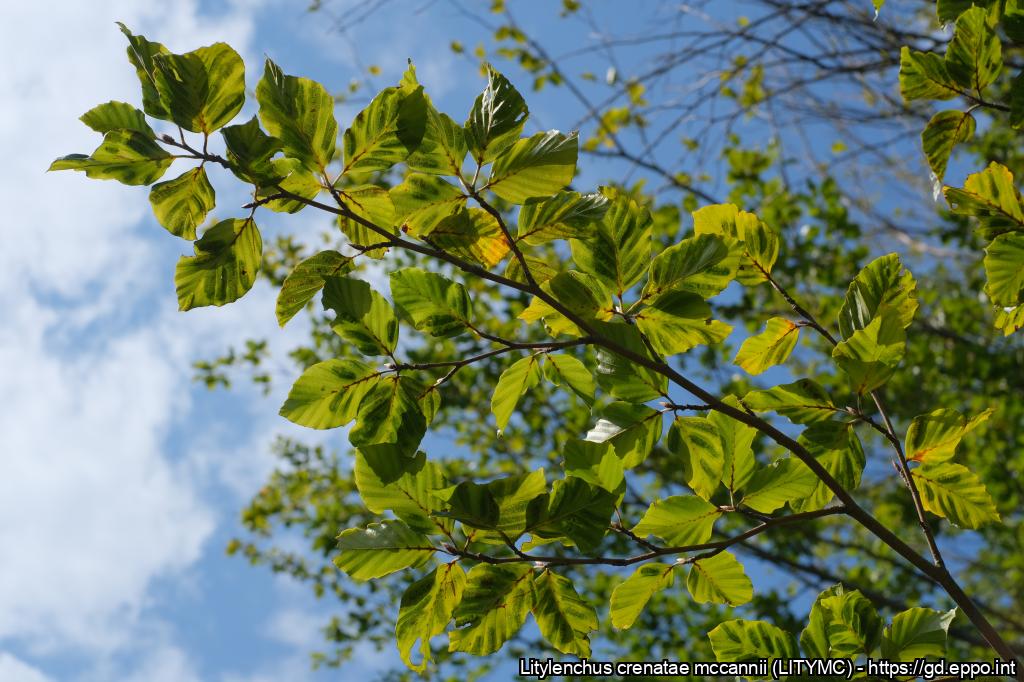
Fagus sylvatica showing characteristic leaf banding due to early stage BLD.
Courtesy: Matthew Borden, Bartlett Tree Research Laboratories & Arboretum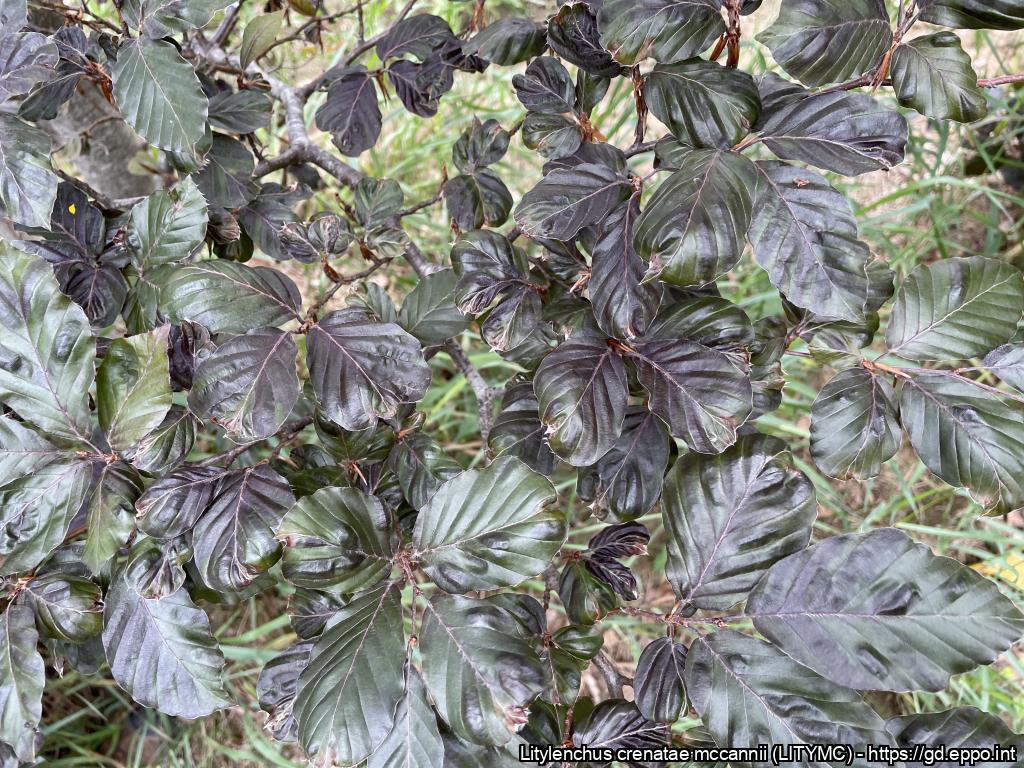
A purple-leaf Fagus sylvatica cultivar displaying leaf banding, bubbling, and some distortion due to BLD.
Courtesy: Matthew Borden, Bartlett Tree Research Laboratories & Arboretum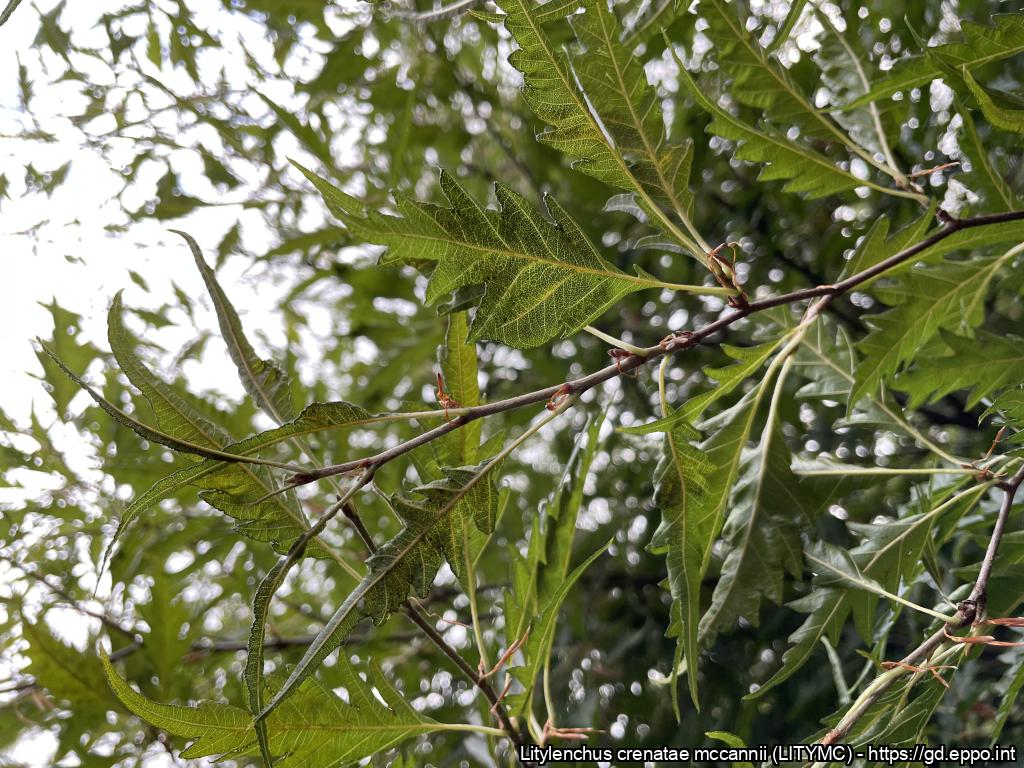
Fagus sylvatica 'Asplenifolia' with subtle symptoms of leaf banding when viewing the backlit, abaxial leaf surface. In the cutleaf beeches, leaves often appear fully galled rather than striped with banded (galled) tissue.
Courtesy: Matthew Borden, Bartlett Tree Research Laboratories & Arboretum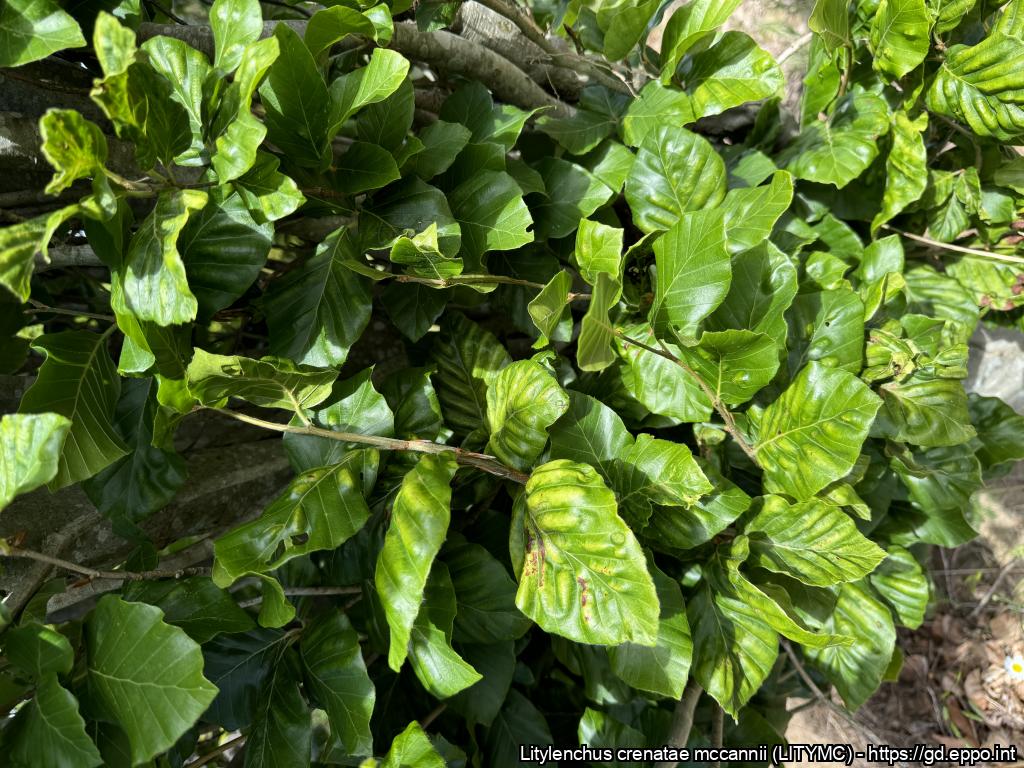
Fagus sylvatica 'Dawyck Green' with subtle symptoms of leaf bubbling when viewing the adaxial leaf surface.
Courtesy: Matthew Borden, Bartlett Tree Research Laboratories & Arboretum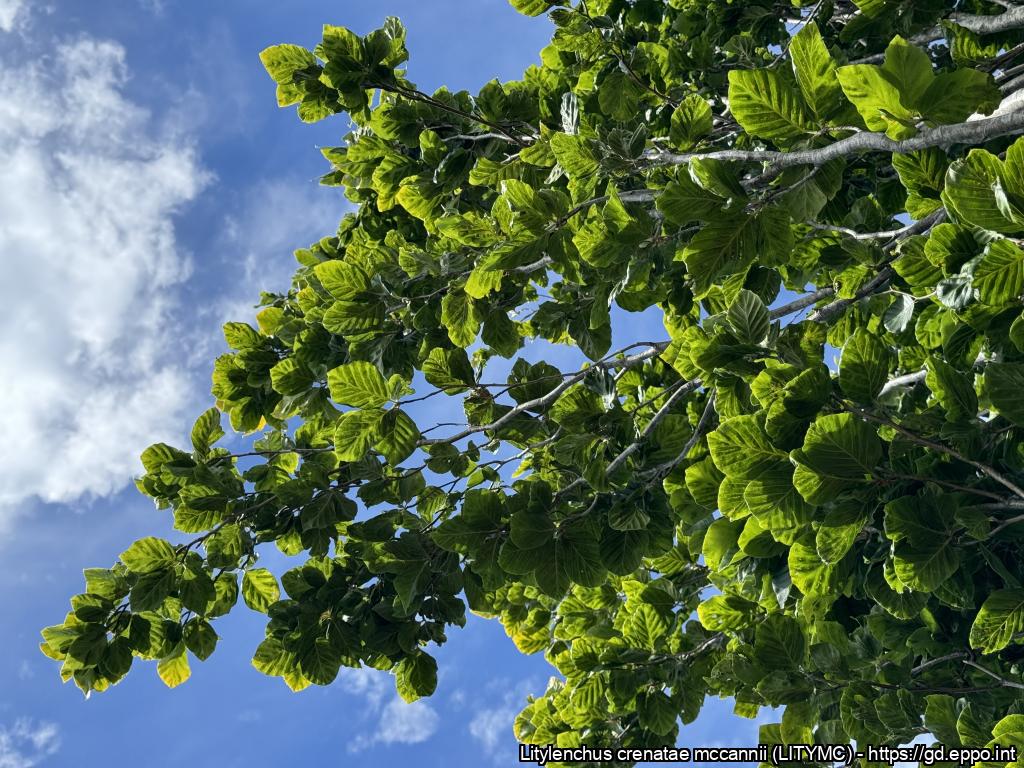
Fagus sylvatica 'Dawyck Green' with dark banding symptoms clear when viewing the abaxial leaf surface with backlighting.
Courtesy: Matthew Borden, Bartlett Tree Research Laboratories & Arboretum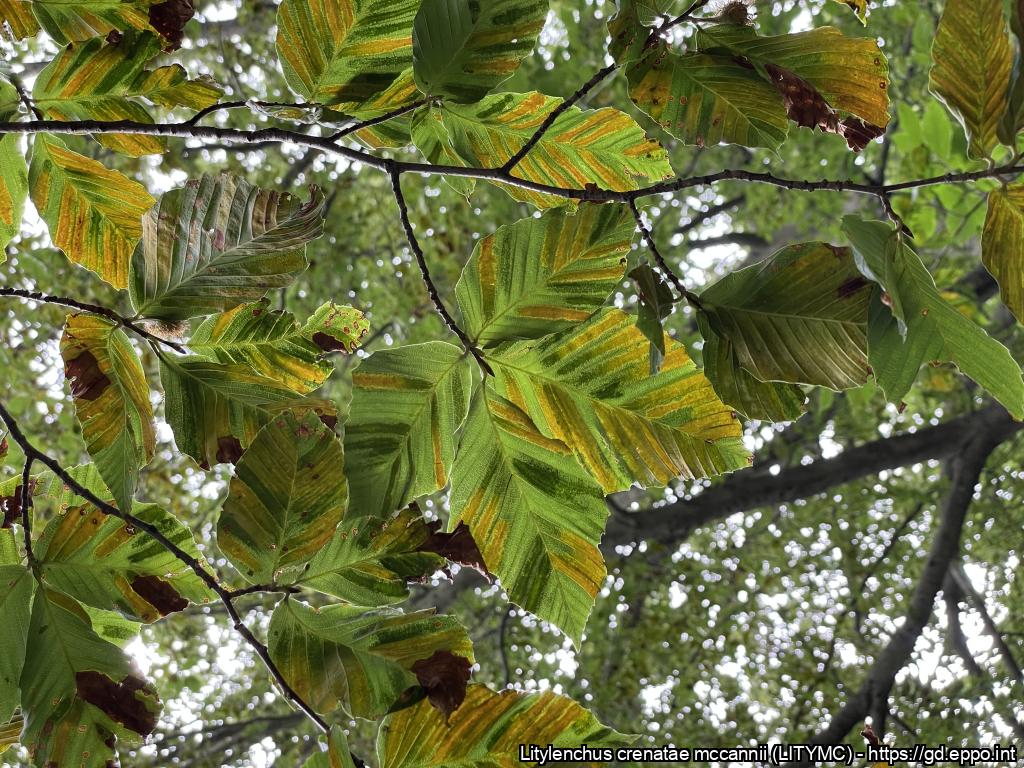
View from leaf underside of American beech, Fagus grandifolia. In late summer, high populations of Litylenchus crenatae nematodes sometimes cause dark green bands (galled tissue) to become chlorotic. During late summer and early fall, populations begin to peak and nematodes are migrating to buds.
Courtesy: Matthew Borden, Bartlett Tree Research Laboratories & Arboretum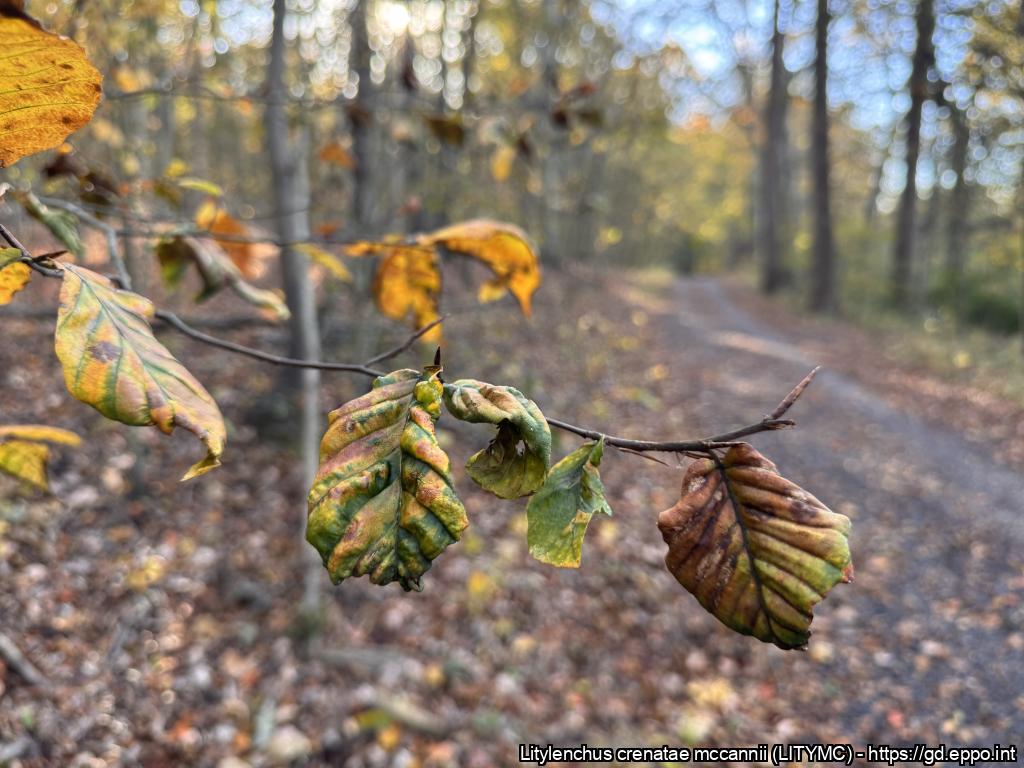
American beech, Fagus grandifolia, exhibiting late-season leaf distortion and thickened, leathery leaves.
Courtesy: Matthew Borden, Bartlett Tree Research Laboratories & Arboretum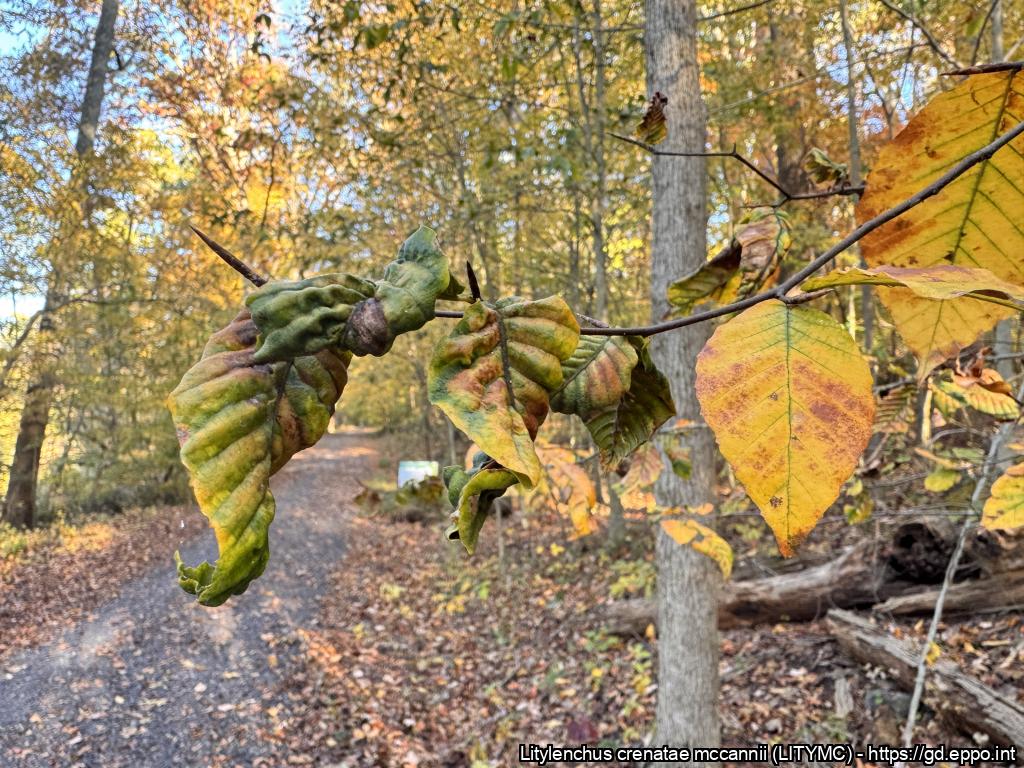
American beech, Fagus grandifolia, exhibiting late-season leaf distortion and thickened, leathery leaves.
Courtesy: Matthew Borden, Bartlett Tree Research Laboratories & Arboretum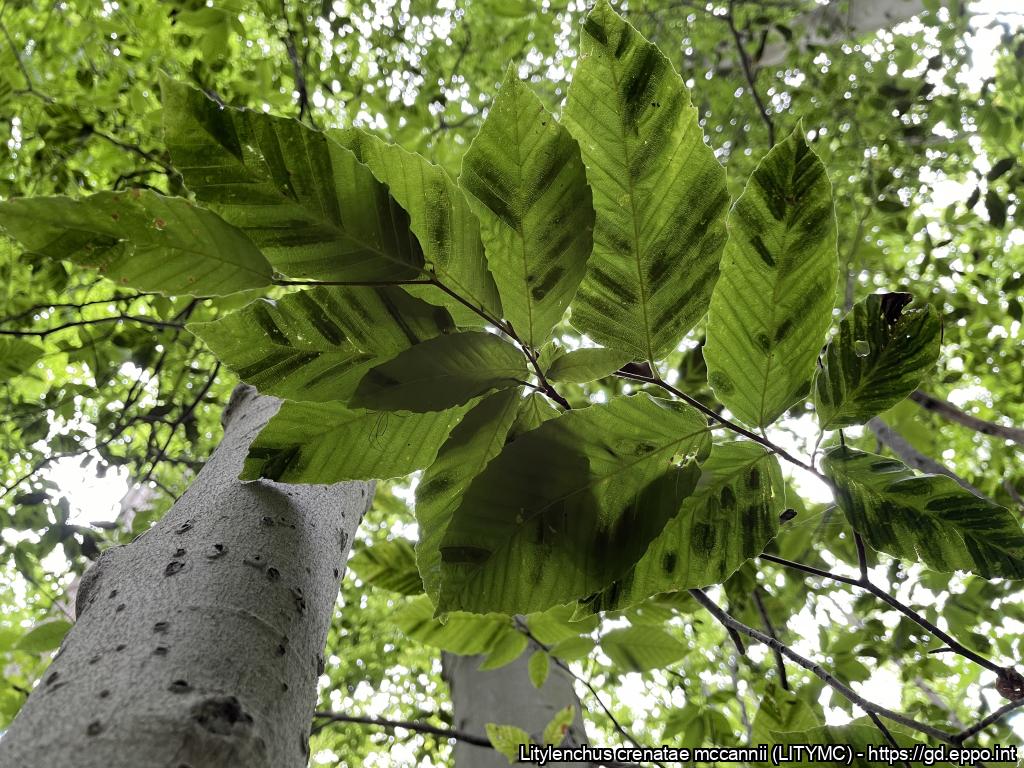
American beech, Fagus grandifolia, showing the dark banding symptom characteristic of beech leaf disease, caused by Litylenchus crenatae mccannii.
Courtesy: Matthew Borden, Bartlett Tree Research Laboratories & Arboretum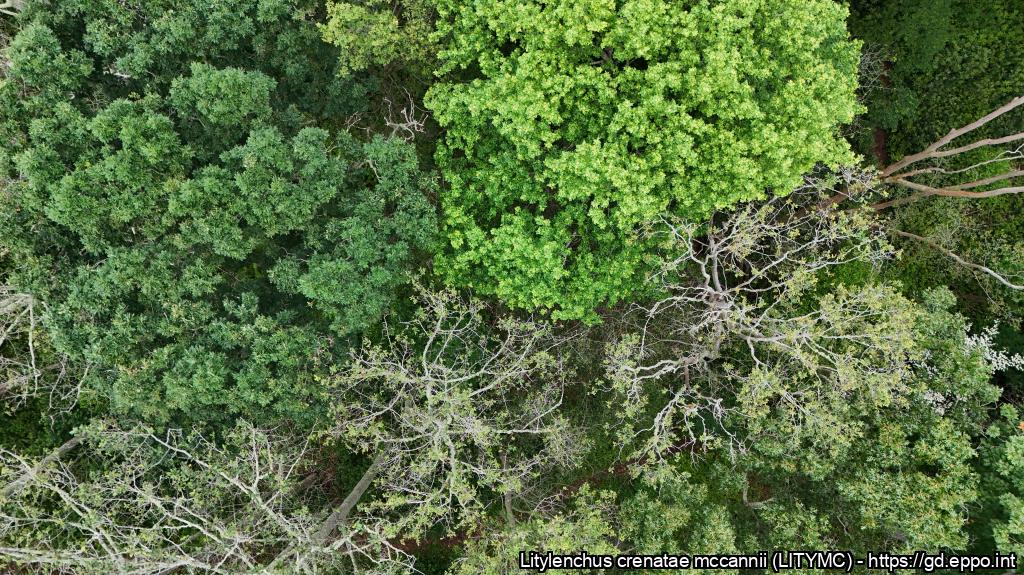
Overhead drove view of an old growth forest in Rhode Island with high density of Fagus grandifolia. Declining beech in lower right half of image contrasting with unaffected white oak and red maple trees.
Courtesy: Andrew Loyd and Sean Henry, Bartlett Tree Research Laboratories & Arboretum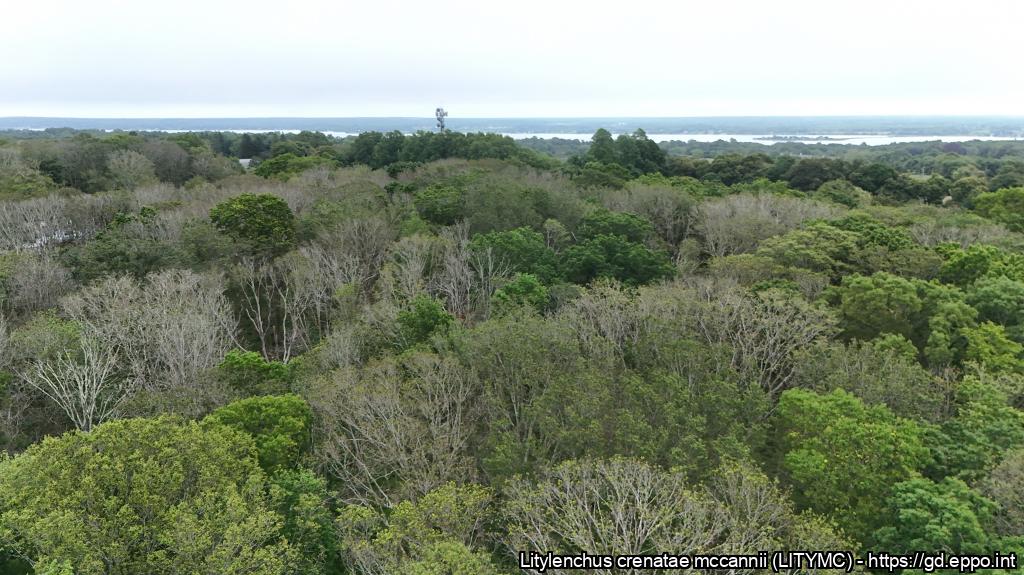
Aerial view of an old growth forest in Rhode Island with high density of Fagus grandifolia being decimated by beech leaf disease. Taken in early summer.
Courtesy: Andrew Loyd and Sean Henry, Bartlett Tree Research Laboratories & Arboretum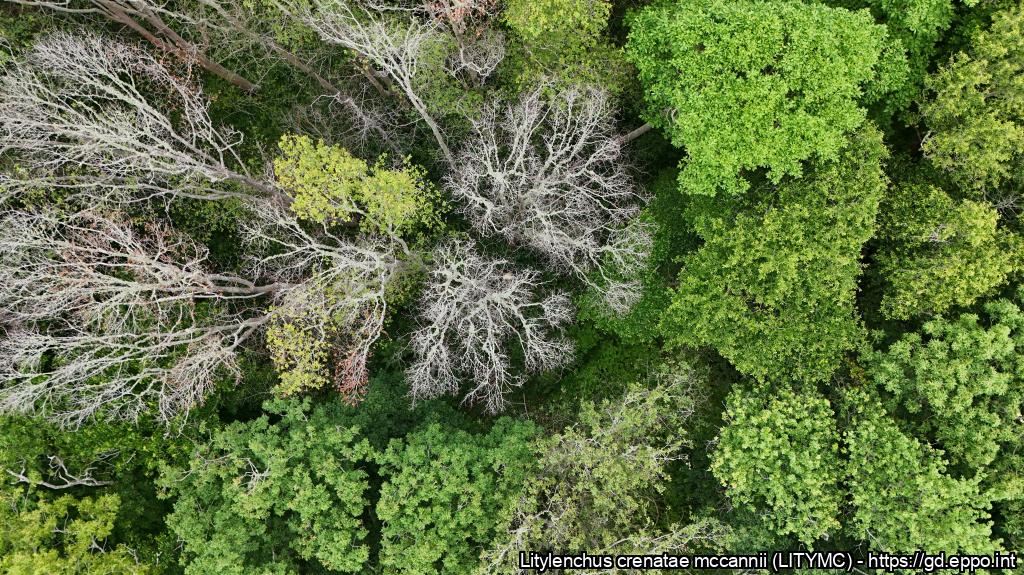
Overhead drove view of an old growth forest in Rhode Island with high density of Fagus grandifolia, seen in early summer. Beech stand in severe decline, bordered by unaffected hardwood species.
Courtesy: Andrew Loyd and Sean Henry, Bartlett Tree Research Laboratories & Arboretum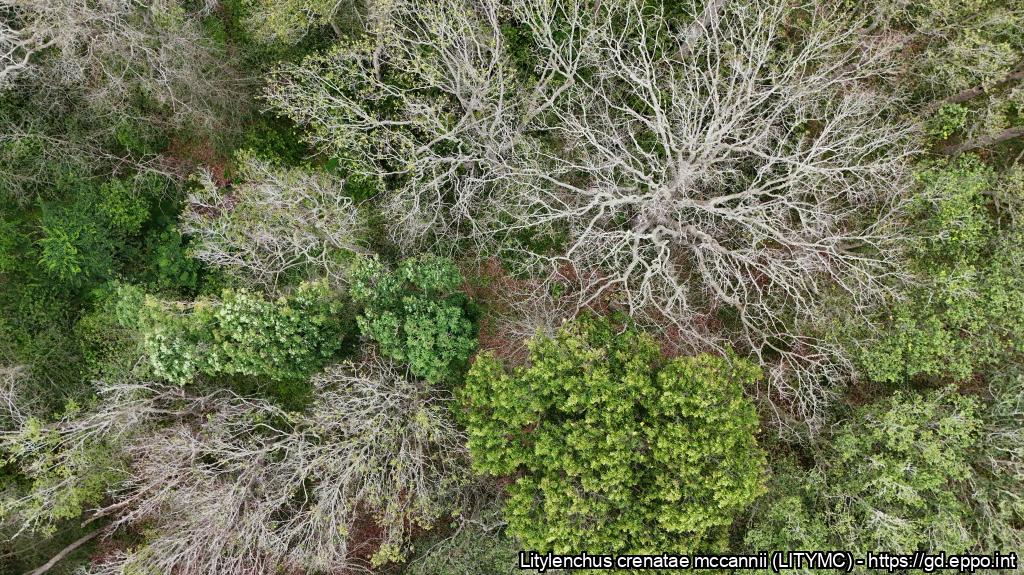
Overhead drove view of an old growth forest in Rhode Island with high density of Fagus grandifolia, seen in early summer. Beech in severe decline or dead, bordered by unaffected hardwood species.
Courtesy: Andrew Loyd and Sean Henry, Bartlett Tree Research Laboratories & Arboretum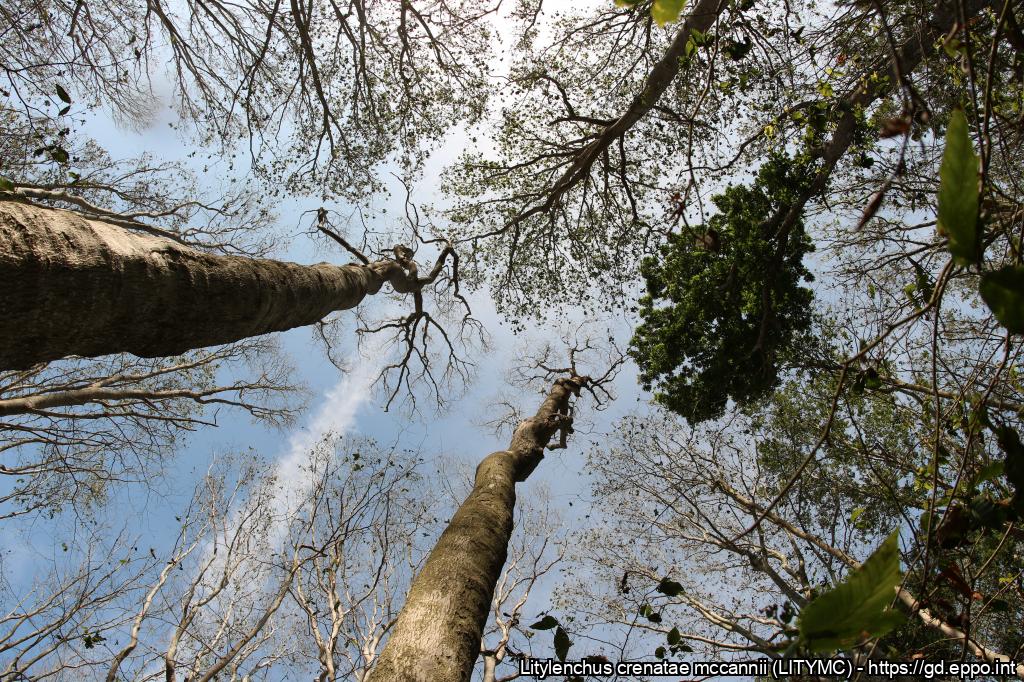
Upward view of mature American beech, Fagus grandifolia, canopy from ground level in early summer. Dead and dying beech due to beech leaf disease are evident and in stark contrast to the canopy of an adjacent white oak.
Courtesy: Andrew Loyd, Bartlett Tree Research Laboratories & Arboretum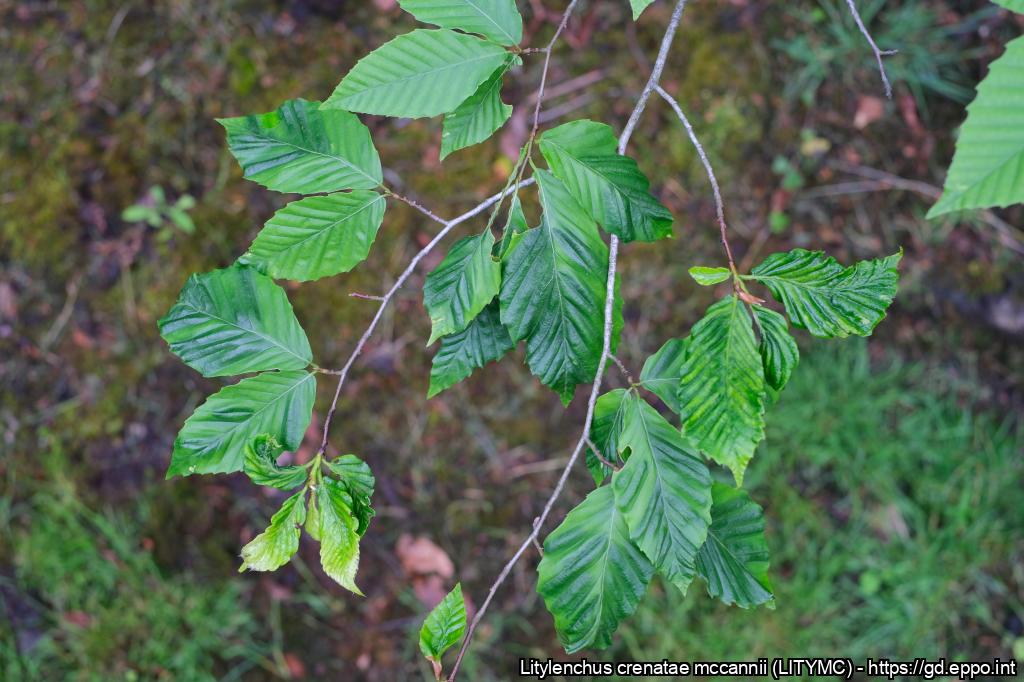
View from upper leaf surface of American beech, Fagus grandifolia, showing various BLD foliar symptoms of banding, distortion, and poor leaf development.
Courtesy: Matthew Borden, Bartlett Tree Research Laboratories & Arboretum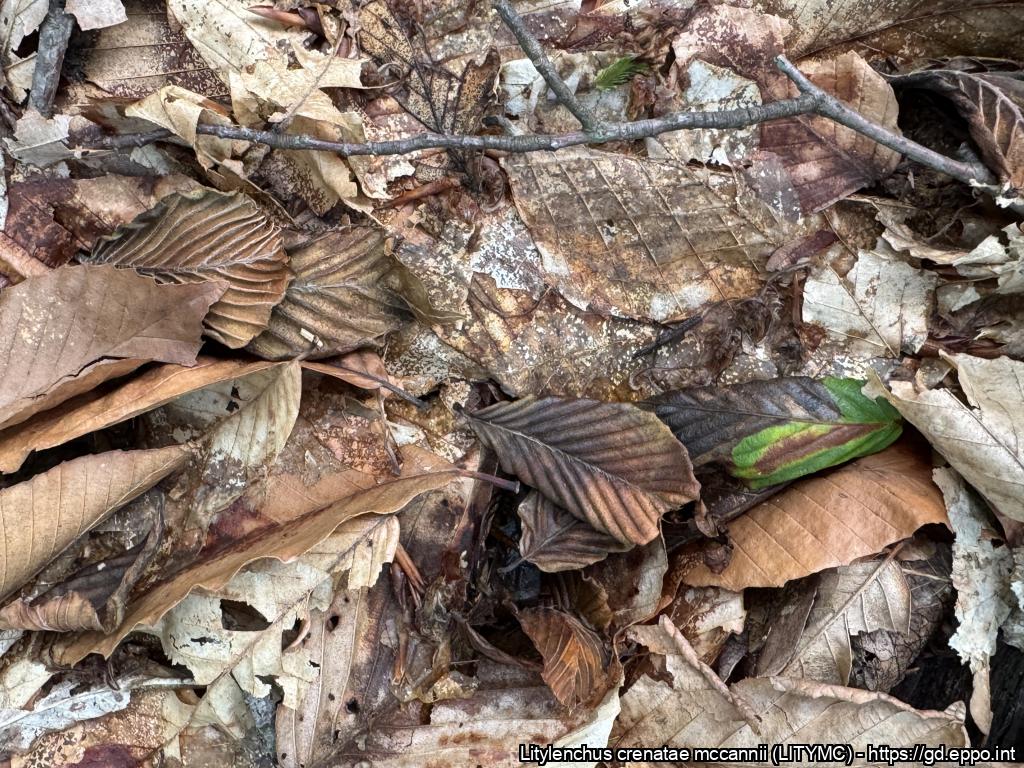
View of leaf litter in early summer, resulting from the defoliation of severely affected leaves shortly after late spring leaf emergence.
Courtesy: Matthew Borden, Bartlett Tree Research Laboratories & Arboretum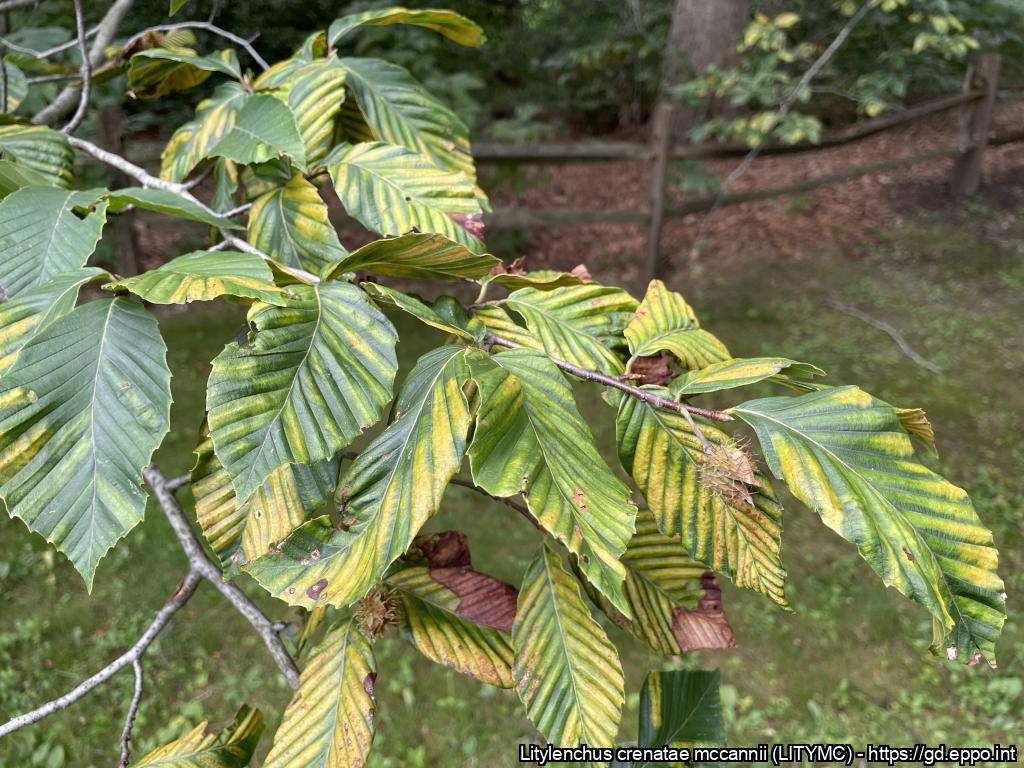
View from upper leaf surface of American beech, Fagus grandifolia. In late summer, high populations of Litylenchus crenatae nematodes sometimes cause dark green bands (galled tissue) to become chlorotic.
Courtesy: Matthew Borden, Bartlett Tree Research Laboratories & Arboretum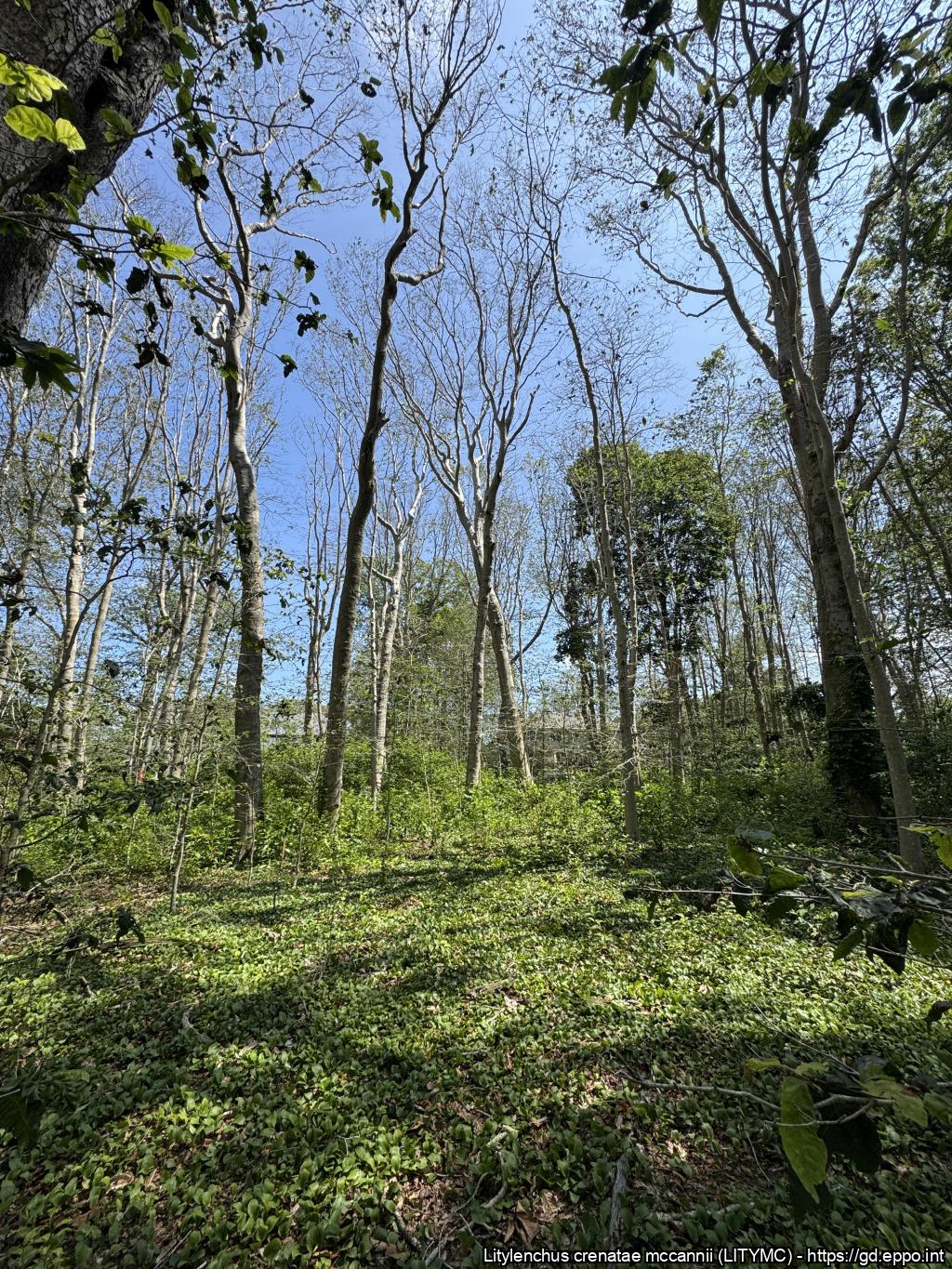
Early summer ground view of an old growth forest in Rhode Island with high density of Fagus grandifolia. Illustrative of the dramatic canopy thinning as beech begin to succumb, driven by BLD pressure. Thinning causes a sudden increase in sunlight exposure to the forest floor and can facilitate growth of invasive plant species.
Courtesy: Matthew Borden, Bartlett Tree Research Laboratories & Arboretum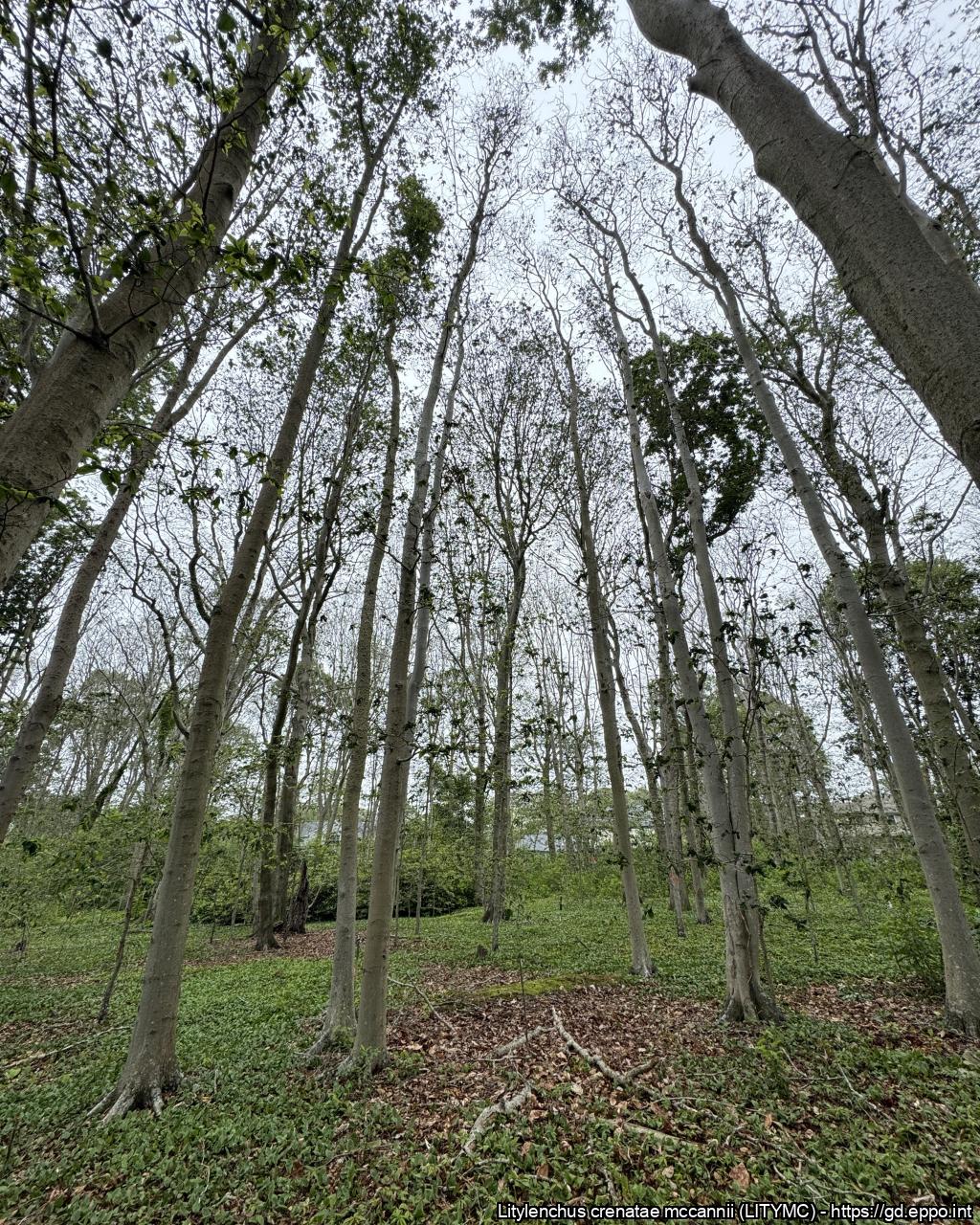
Early summer ground view of an old growth forest in Rhode Island with high density of Fagus grandifolia. Illustrative of the dramatic canopy thinning as beech begin to succumb, driven by BLD pressure. Thinning causes a sudden increase in sunlight exposure to the forest floor.
Courtesy: Matthew Borden, Bartlett Tree Research Laboratories & Arboretum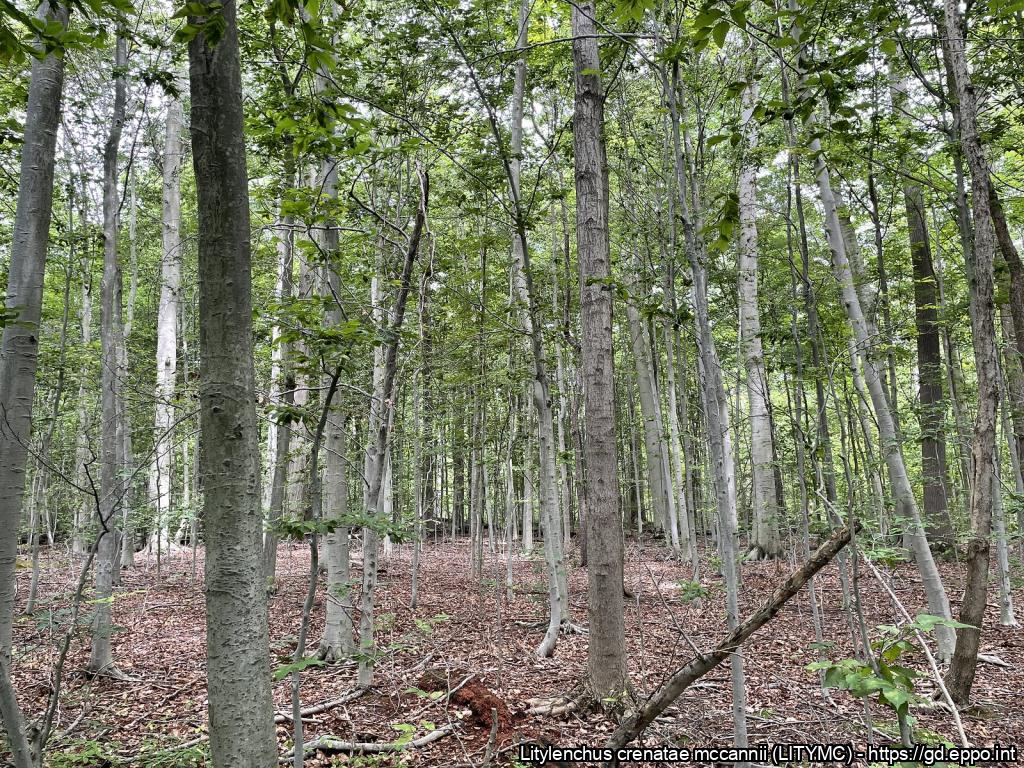
View looking through a mixed hardwood forest in Ohio, USA. Illustrative of the gradual thinning affect of recent BLD impact on beech undergrowth, where previously the beech understory was dense and shady.
Courtesy: Matthew Borden, Bartlett Tree Research Laboratories & Arboretum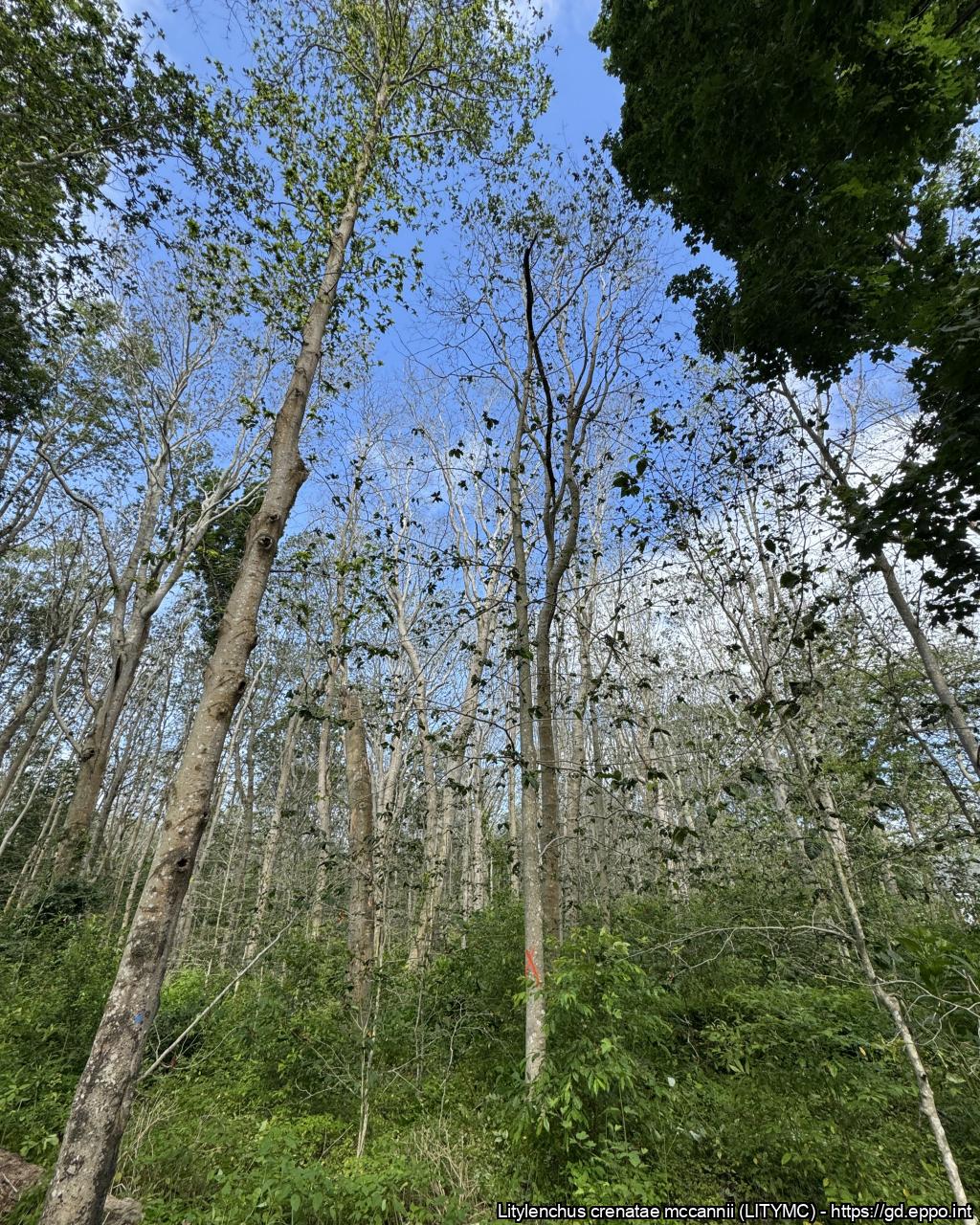
Early summer ground view of an old growth forest in Rhode Island with high density of Fagus grandifolia and an Acer in the upper right. Illustrative of the dramatic canopy thinning as beech begin to die, driven by BLD pressure. Thinning causes a sudden increase in sunlight exposure to the forest floor and can facilitate growth of invasive plant species.
Courtesy: Matthew Borden, Bartlett Tree Research Laboratories & Arboretum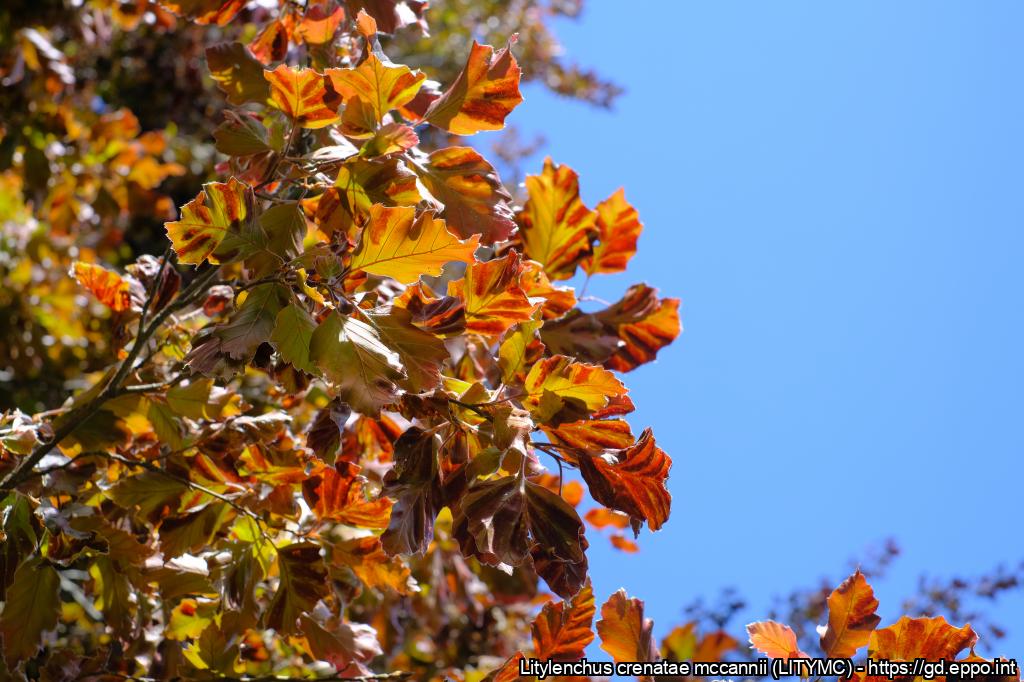
A Fagus sylvatica, European beech cultivar, showing characteristic leaf banding due to early stage BLD. The galled, thickened leaf banding tissue appears dark green on green cultivars, but appears a deeper red-orange on copper-leaf cultivars.
Courtesy: Matthew Borden, Bartlett Tree Research Laboratories & Arboretum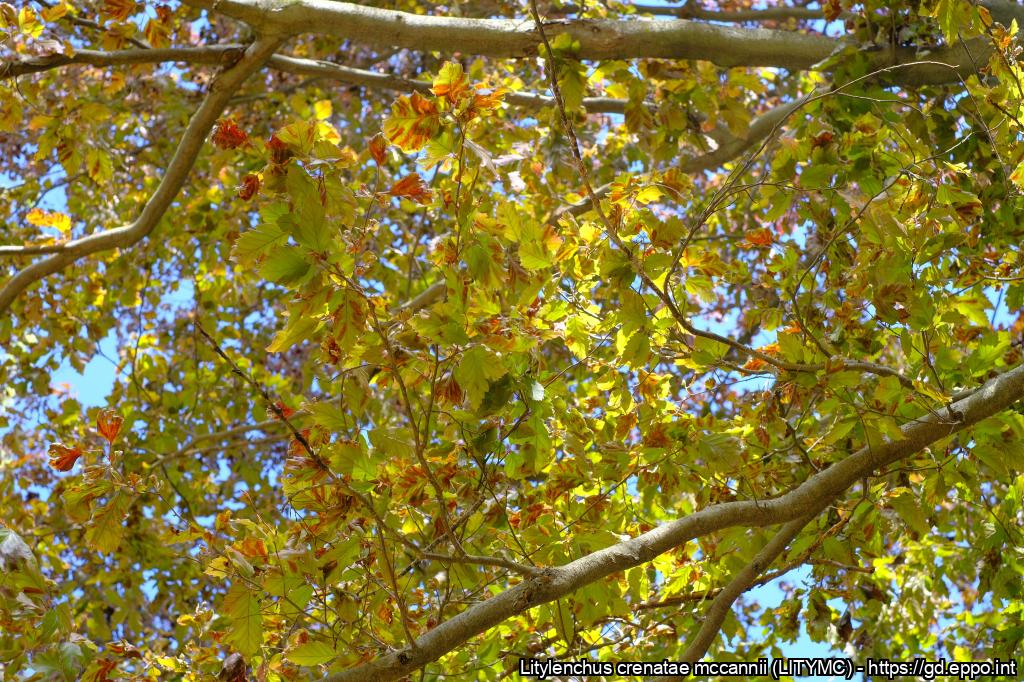
A Fagus sylvatica, European beech cultivar, showing characteristic leaf banding due to early stage BLD. The galled, thickened tissue of leaf bands can appear a deep red-orange on copper-leaf cultivars.
Courtesy: Matthew Borden, Bartlett Tree Research Laboratories & Arboretum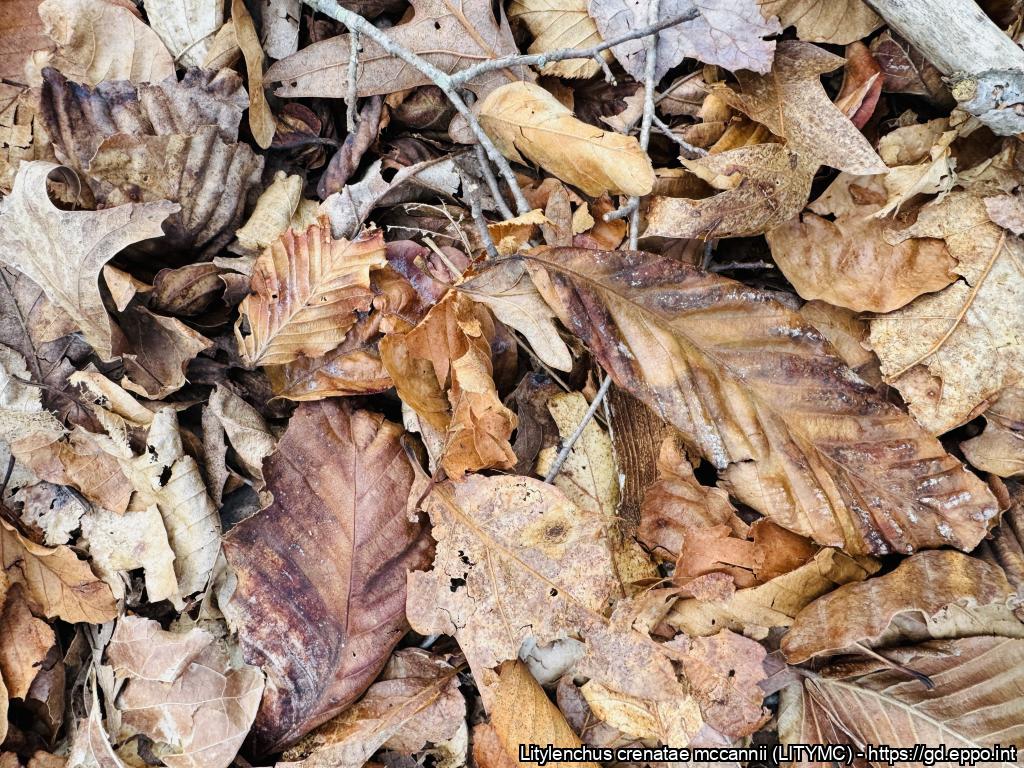
Foliar BLD symptoms remain evident throughout the dormant season, seen here in forest leaf litter of a mixed beech (Fagus grandifolia) hardwood stand in late winter. The galled, banded leaf tissue on several beech leaves is evident.
Courtesy: Matthew Borden, Bartlett Tree Research Laboratories & Arboretum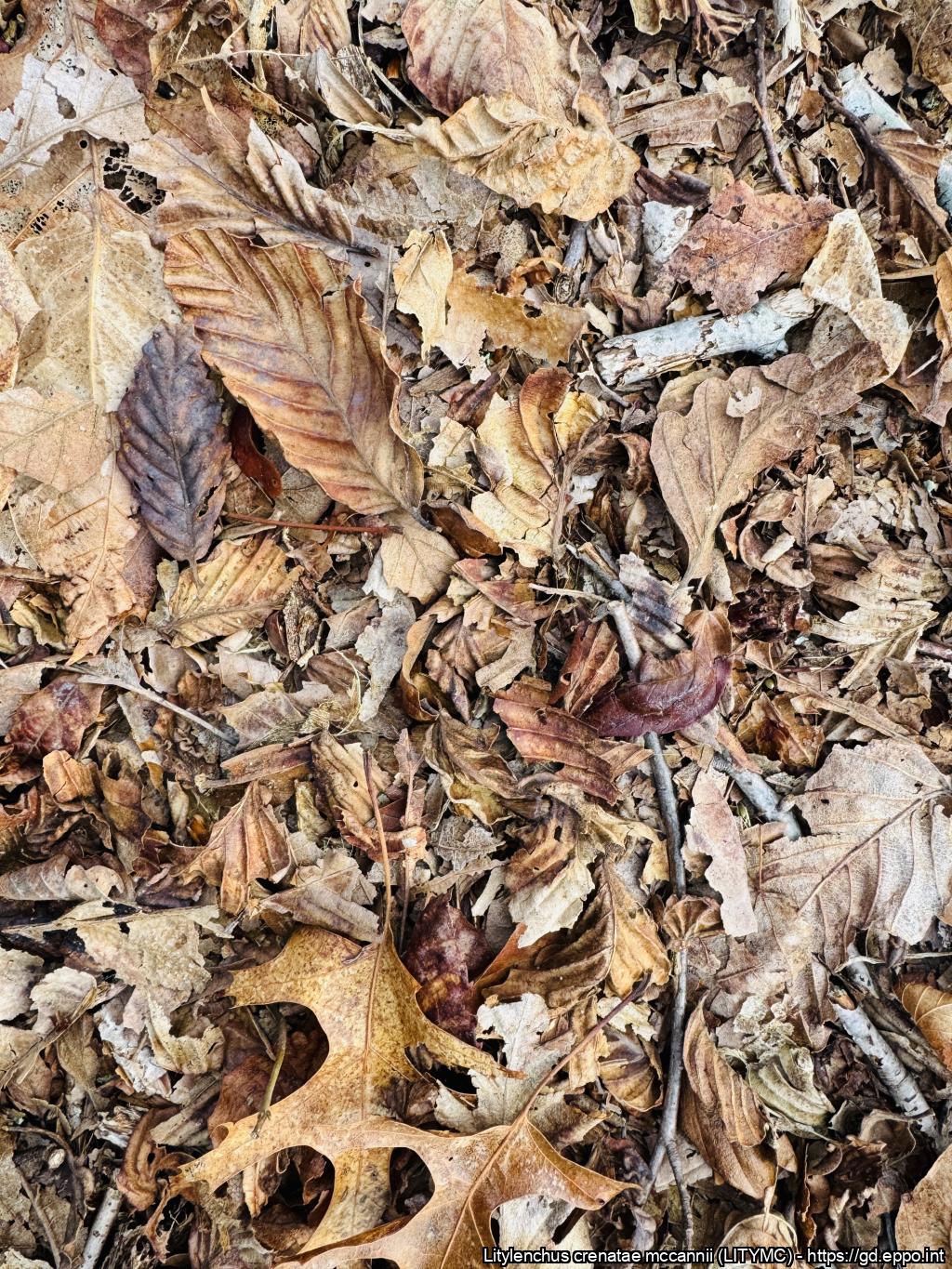
Foliar BLD symptoms remain evident throughout the dormant season, seen here in forest leaf litter of a mixed beech (Fagus grandifolia) hardwood stand in late winter. Abnormally thickened and deformed beech leaves are evident.
Courtesy: Matthew Borden, Bartlett Tree Research Laboratories & Arboretum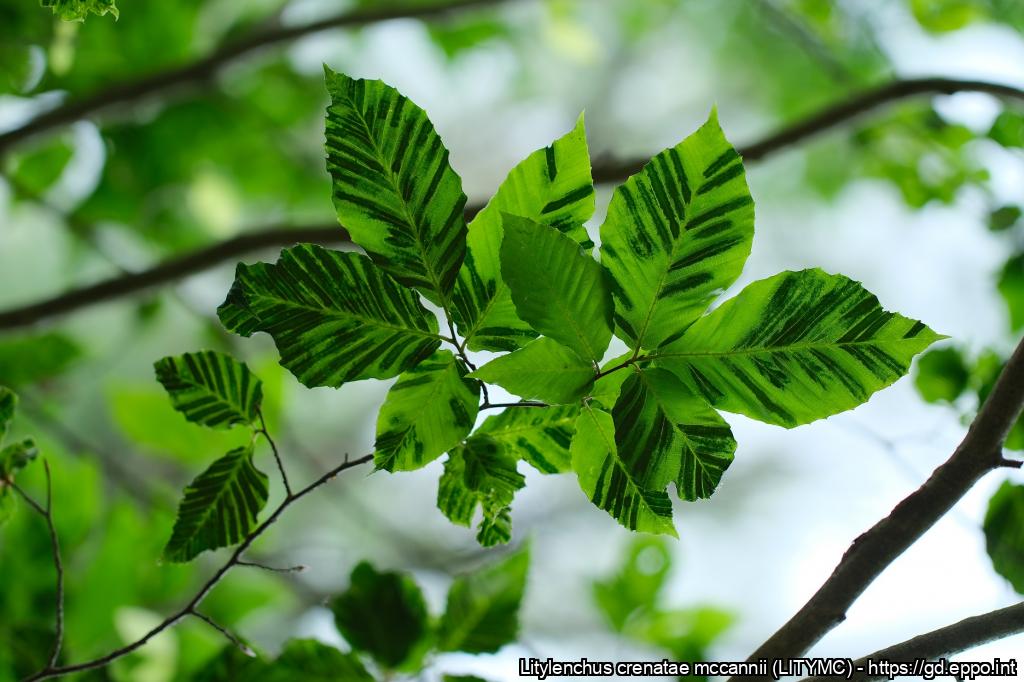
The dark banding symptom characteristic of beech leaf disease, caused by Litylenchus crenatae mccannii. Banding is the first symptom typically observed on Fagus sp., seen here on American beech, Fagus grandifolia.
Courtesy: Matthew Borden, Bartlett Tree Research Laboratories & Arboretum