
Biscogniauxia mediterranea(HYPOME)
Photos
For publication in journals, books or magazines, permission should be obtained from the original photographers with a copy to EPPO.
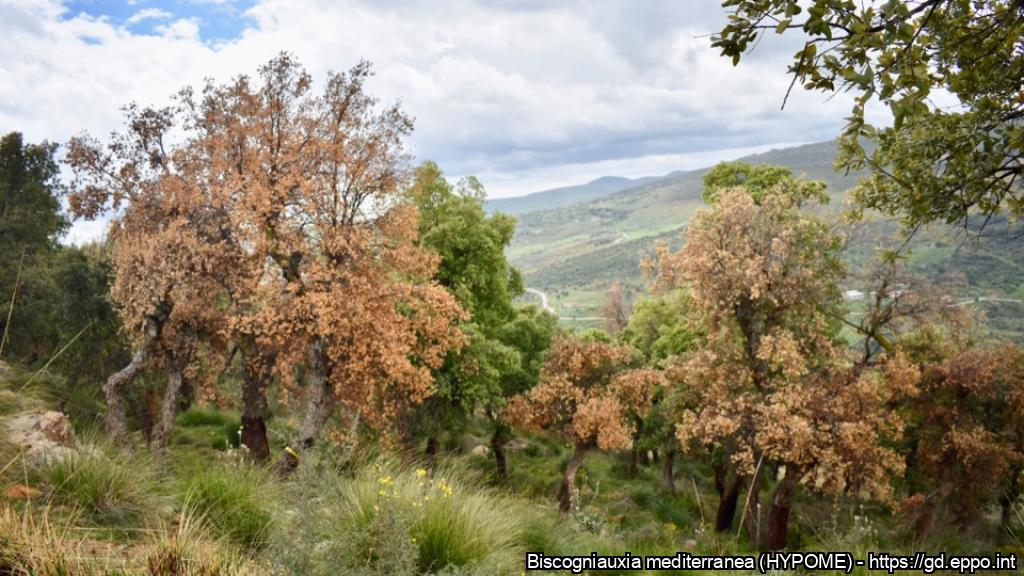
Cork oak trees infected by charcoal canker
Courtesy: Souhila Aouali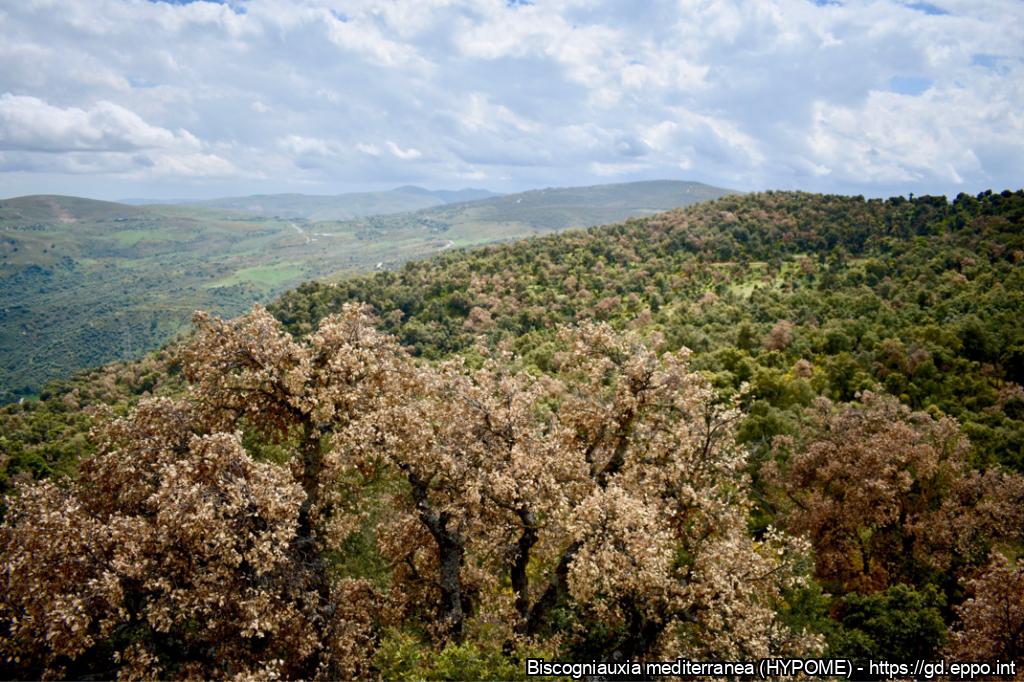
Dieback of cork oak orchad due to charcoal canker disease
Courtesy: Souhila Aouali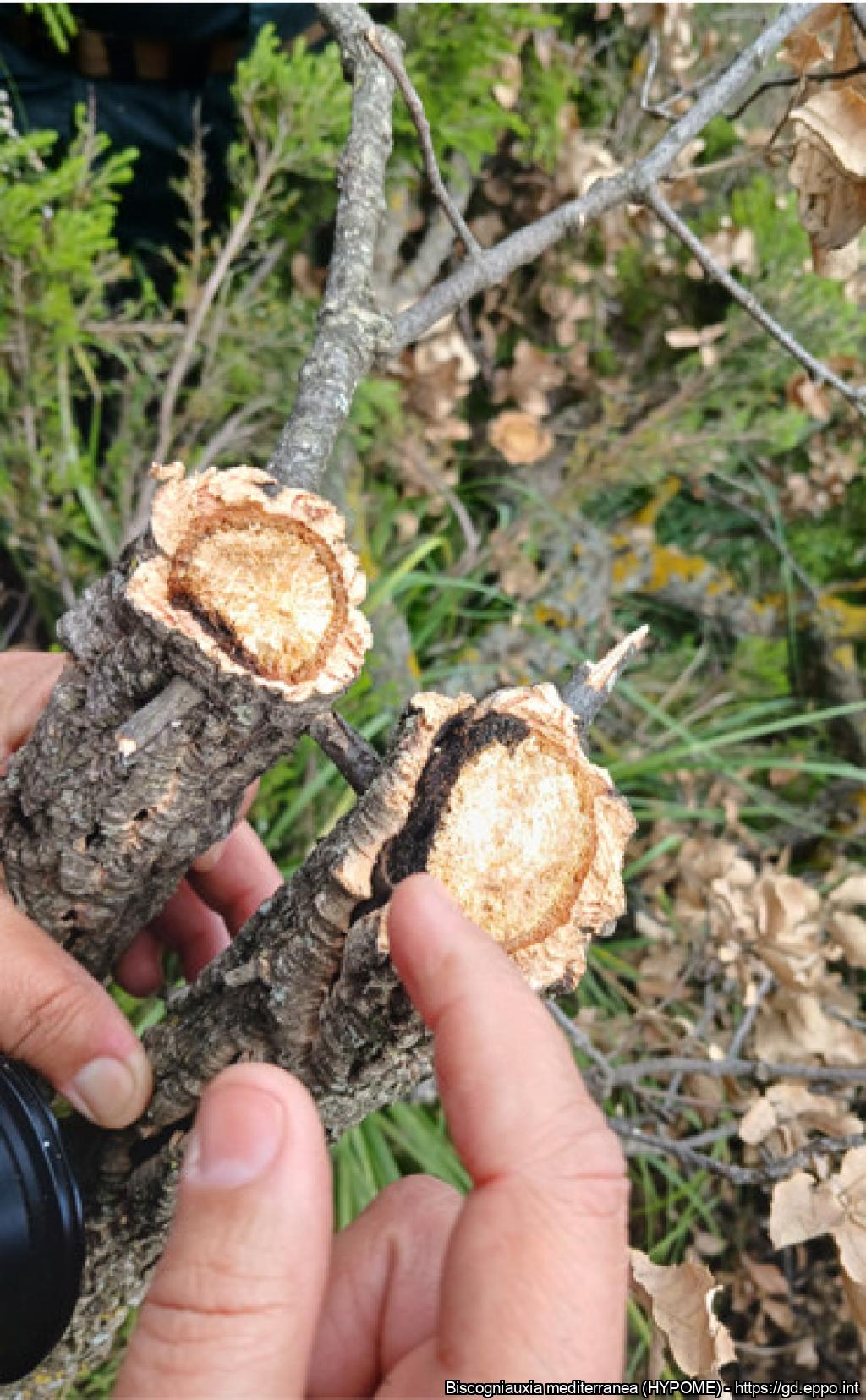
Cross section of a cork oak branch illustrating colonization of the cambial tissues by Biscogniauxia mediterranea, leading to blackening of the affected tissues.
Courtesy: Souhila Aouali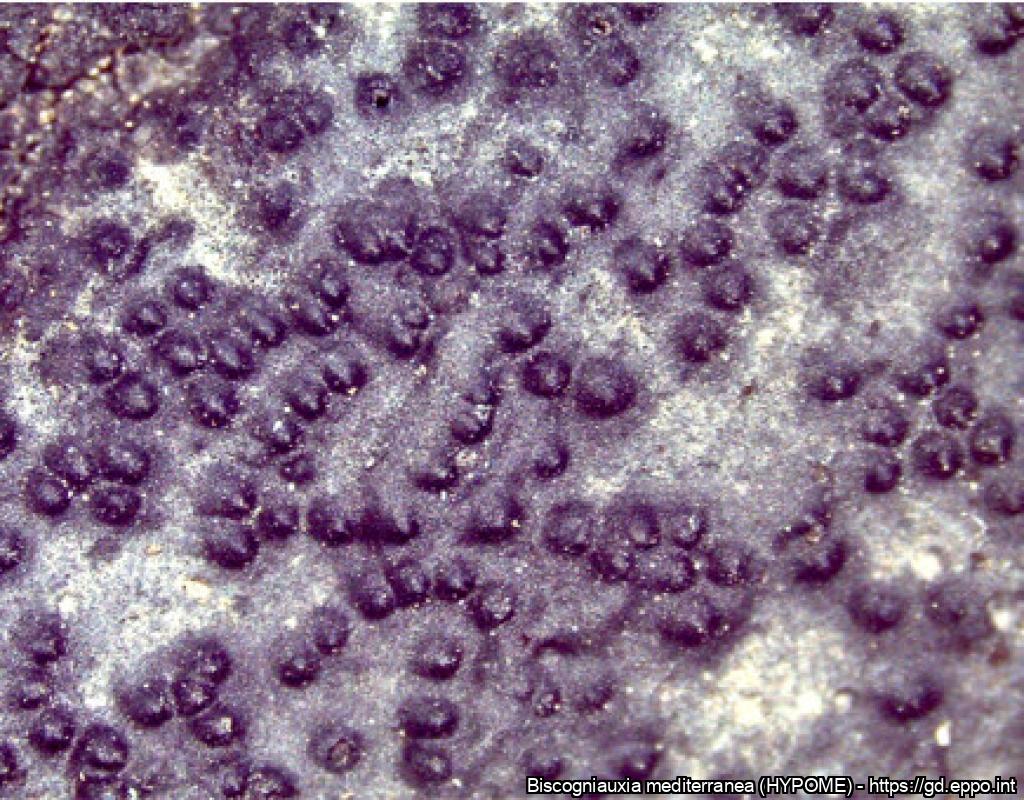
Stroma under stereomicroscope: ostioles inconspicuous to slightly prominent, giving a finely punctate appearance
Courtesy: Souhila Aouali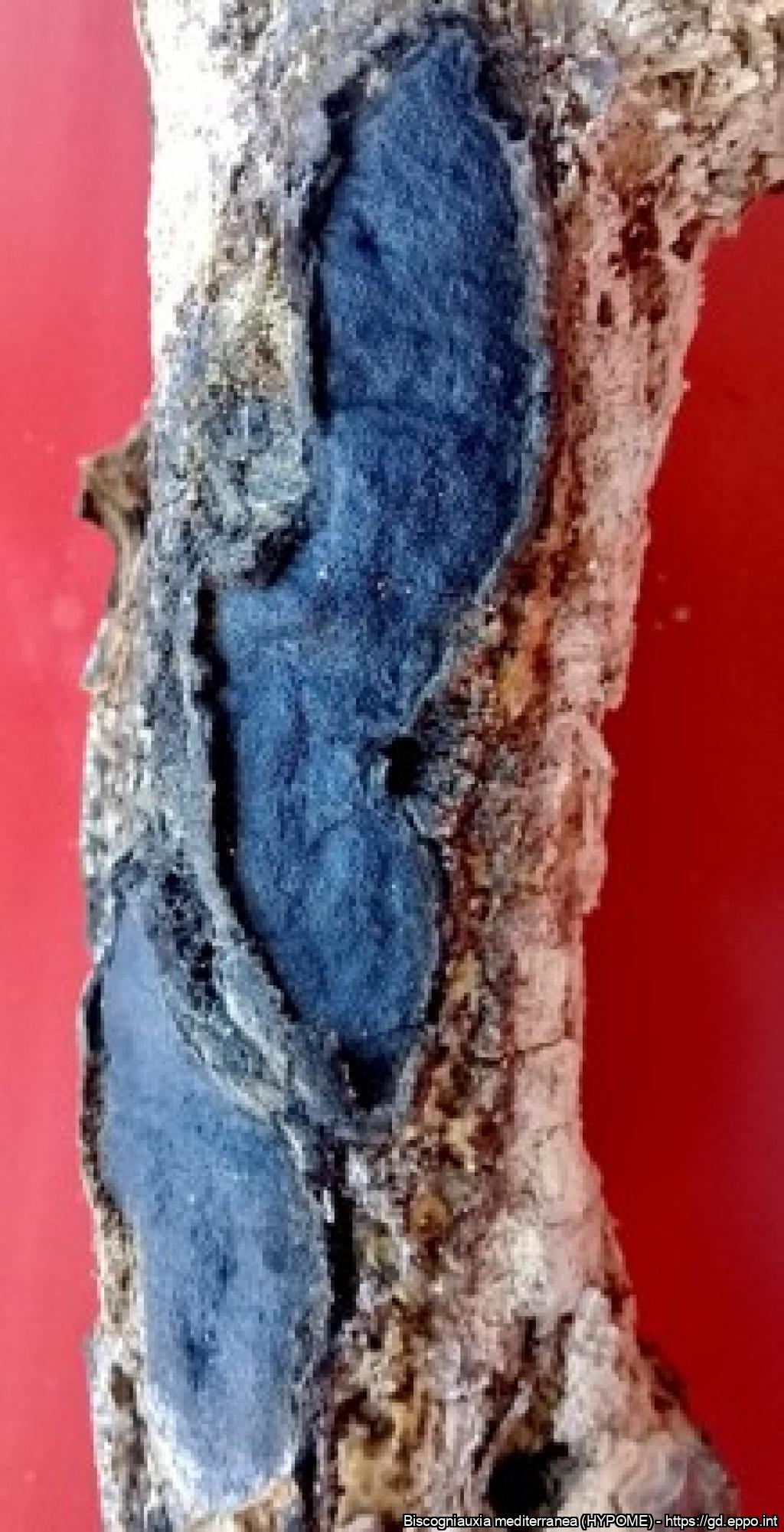
Subcortical black stromata formed beneath the bark.
Courtesy: Souhila Aouali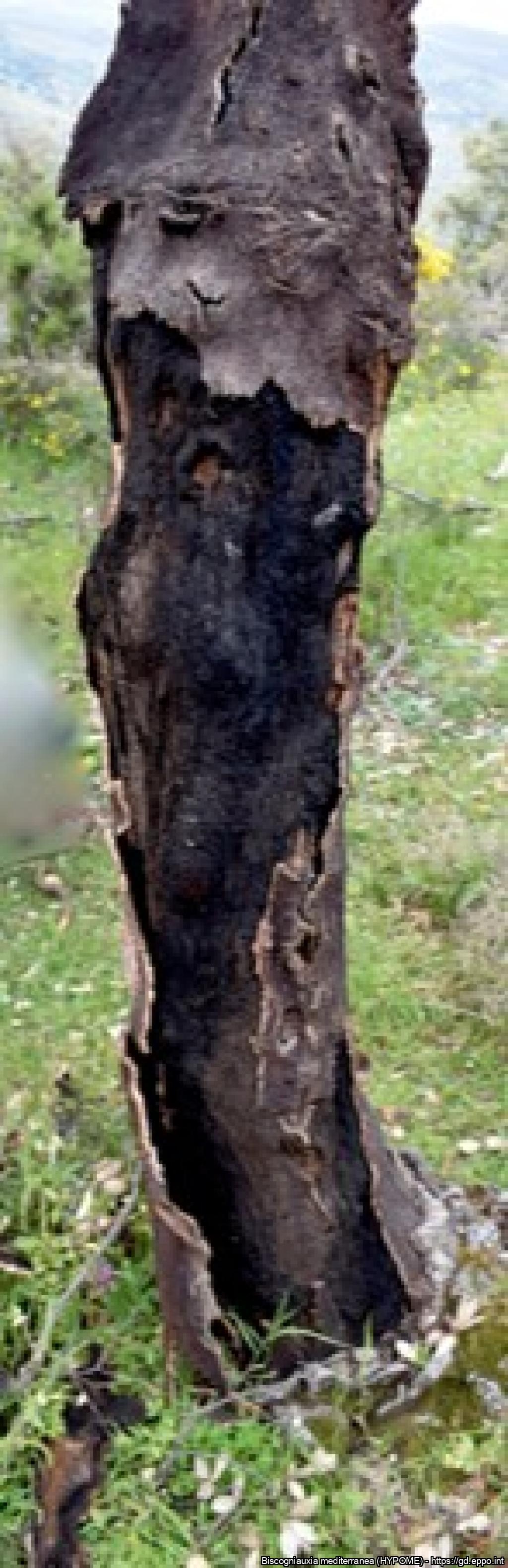
Bark removal exposes extensive black, carbonaceous stromatic tissues beneath.
Courtesy: Souhila Aouali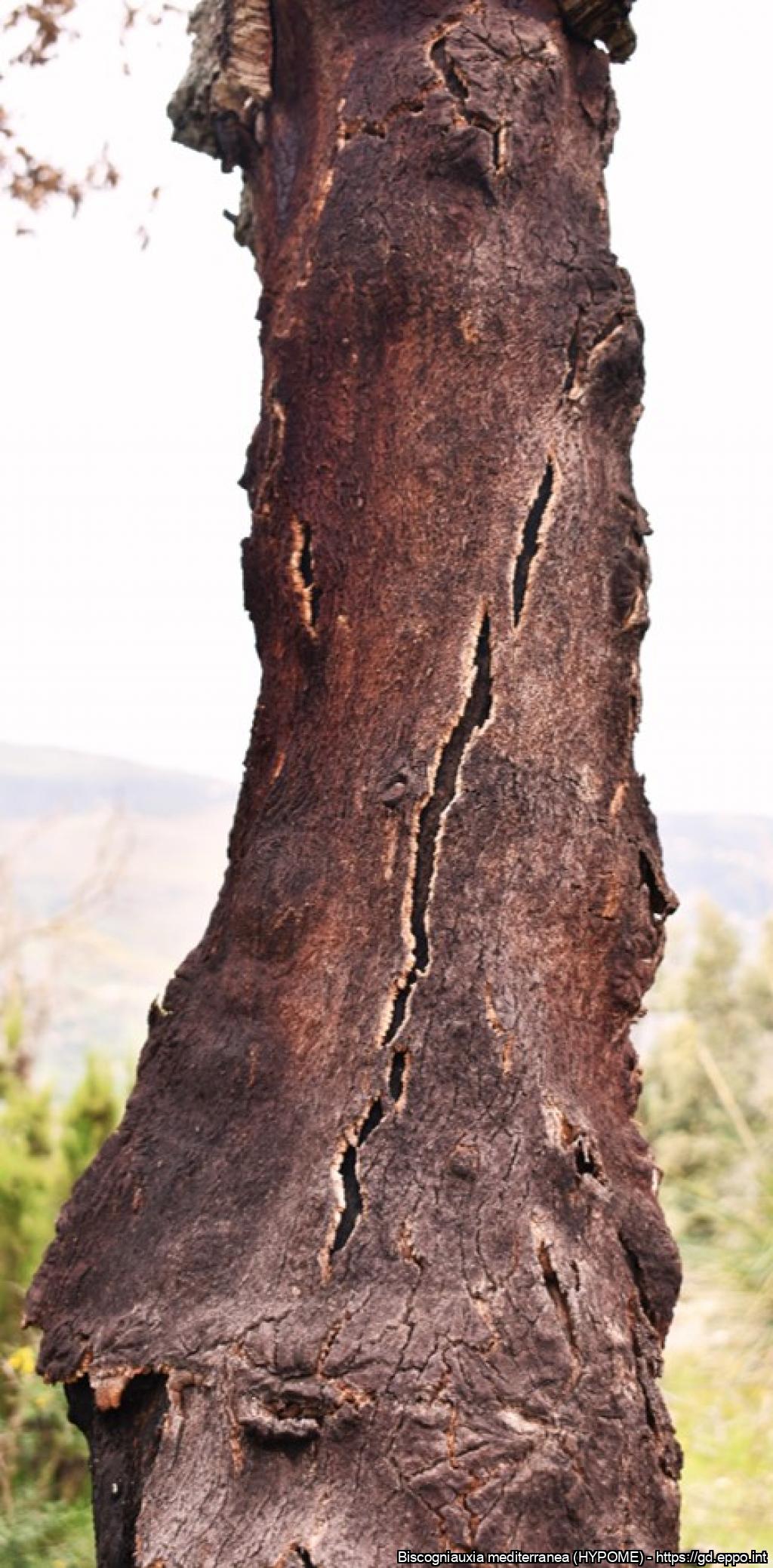
Longitudinal fissures on cork oak trunks associated with black discoloration of the underlying tissues.
Courtesy: Souhila Aouali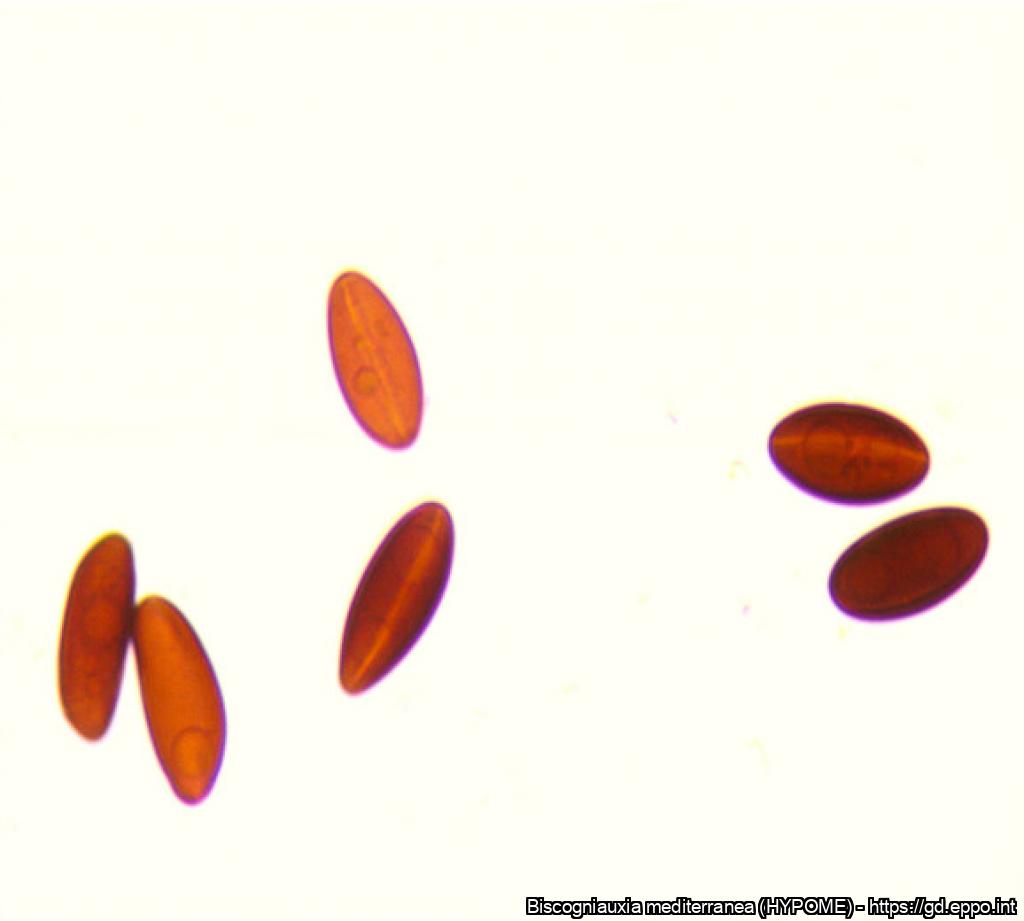
Ascospores are brown, ellipsoid to inequilateral, often appearing coffee bean–shaped with a distinct central groove
Courtesy: Souhila Aouali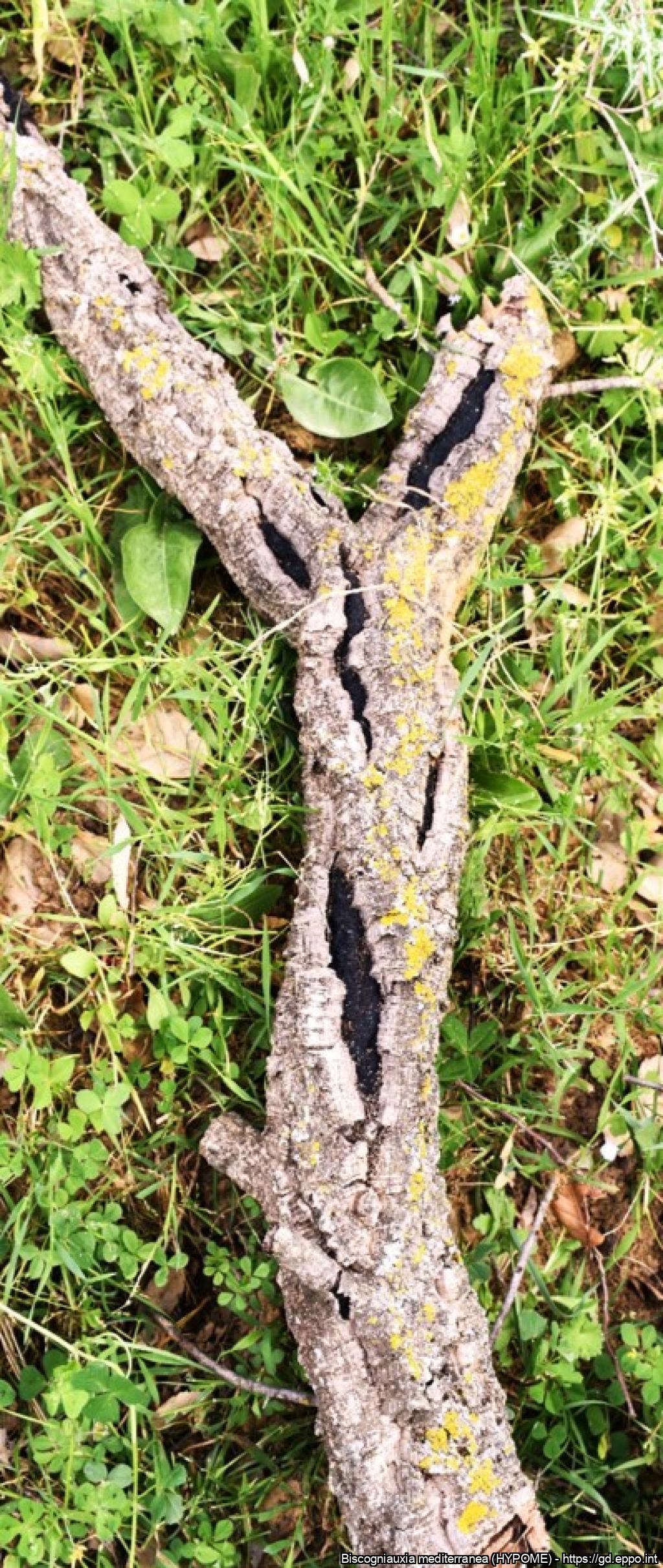
Longitudinal bark cracks on a branche revealing black, carbonaceous tissues beneath.
Courtesy: Souhila Aouali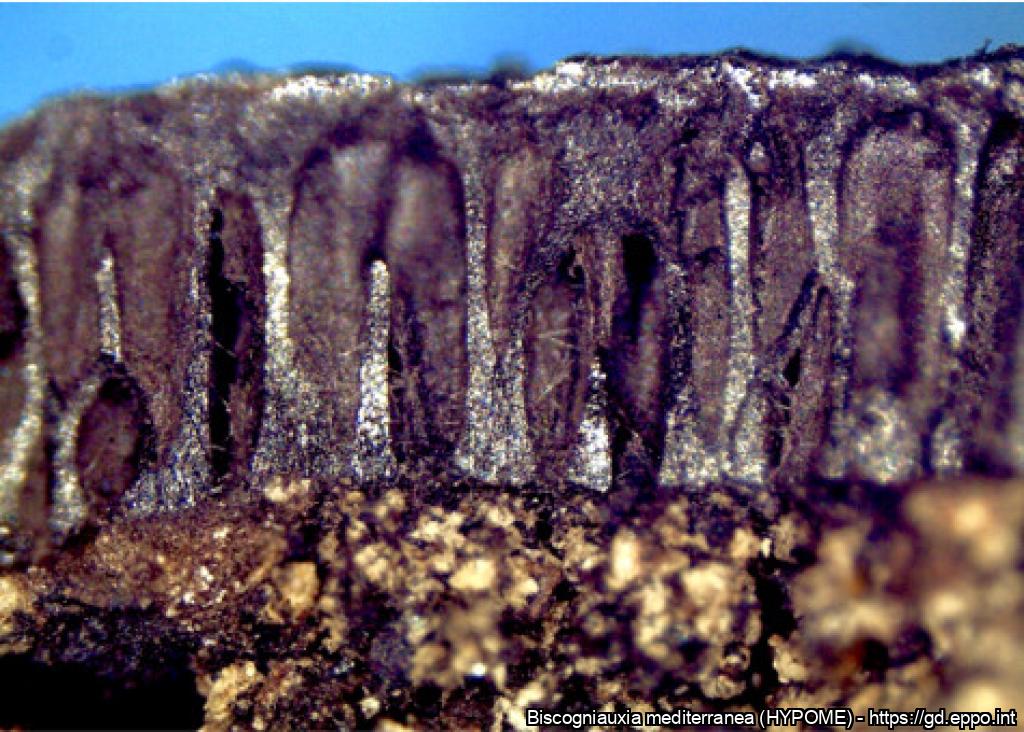
Longitudinal section of the stroma showing perithecia immersed in the stromatal matrix
Courtesy: Souhila Aouali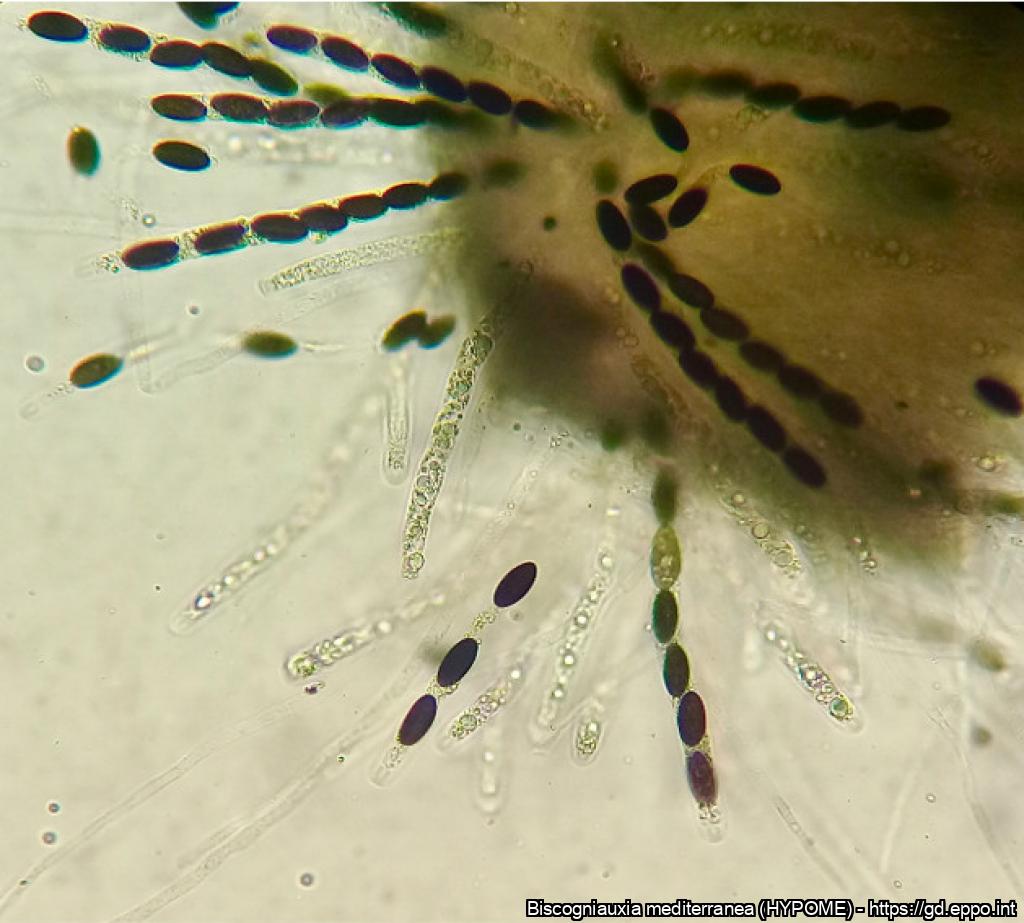
Asci are cylindrical, unitunicate, 8-spored, arising from the hymenial layer
Courtesy: Souhila Aouali